It seems we can’t find what you’re looking for. Perhaps searching can help.
Top 7 Red Flags When Comparing Industrial Boiler Service Providers for Indian Power Plants
industrial boiler service providersindustrial boiler installationboiler repair services indiaindustrial boiler maintenance cost
Every power producer has a story about a boiler outage that went from routine to catastrophic. The pattern is almost always the same: a low-bid contractor, an optimistic schedule, vague paperwork—and then escalating delays, hidden costs, and mounting megawatts lost. In India’s increasingly competitive power market, those missteps are no longer survivable rounding errors; they are margin killers.
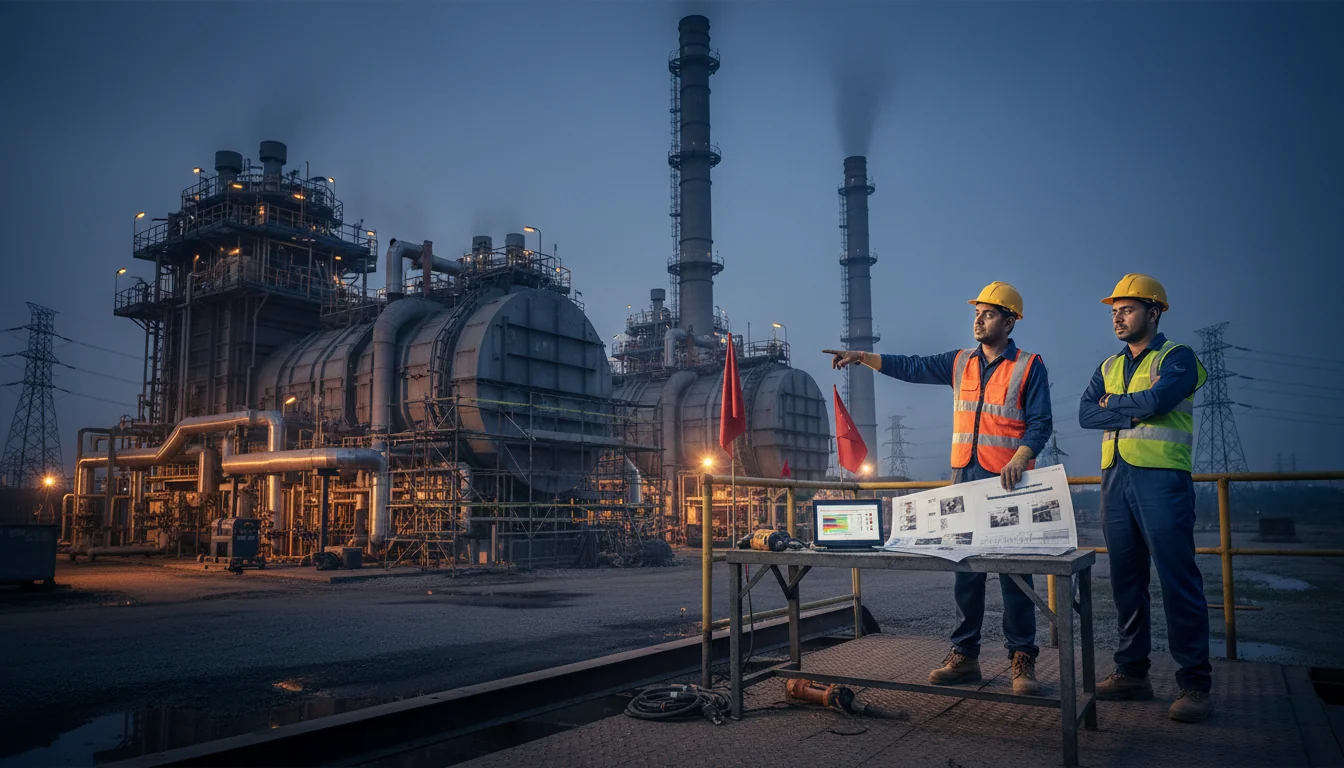
Choosing industrial boiler service providers—whether for a new industrial boiler installation, a high-pressure retrofit, or emergency boiler repair services in India—is no longer just a procurement exercise. It is a strategic risk decision. Yet tender documents and comparison sheets still focus on line-item rates instead of operational reality: safety, reliability, integration with existing systems, and the provider’s ability to execute under Indian site conditions.
This article breaks down seven red flags that Boilleo Private Limited routinely sees when power plants compare bids. Each one is subtle enough to miss in a spreadsheet—but expensive enough to derail an entire outage window. Use them as a hard filter when shortlisting industrial boiler service providers across India.
Red Flag 1: Vague Scope Definitions That Hide Real Industrial Risks
The most dangerous proposals are often the shortest. When a vendor describes their industrial boiler service scope in generic terms—“complete boiler overhauling,” “full EPC support,” “standard industrial boiler maintenance”—it signals risk, not efficiency. Hidden behind those phrases are hundreds of micro-activities: scaffolding design, material handling plans, NDT protocols, valve overhauls, insulation reinstatement, integration with DCS, and recommissioning sequences.
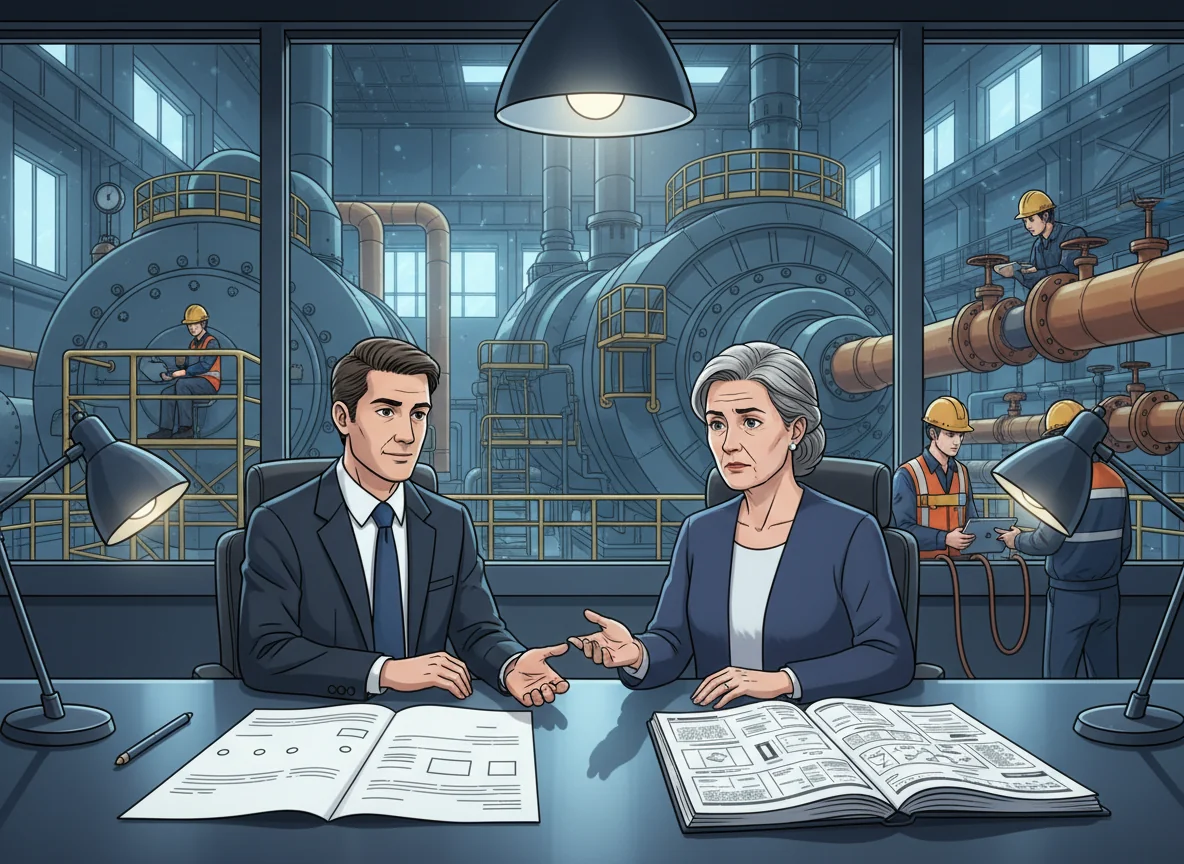
Power plants that sign on vague scopes usually discover three problems late: scope creep, variation orders, and finger-pointing between multiple contractors. A provider that treats boilers in isolation, without acknowledging interfaces with industrial process piping, power cycle piping, illumination and signaling systems, and power/control cabling, is effectively offloading integration risk onto you.
By contrast, mature partners in India’s power sector will provide a granular work breakdown that explicitly covers:
- Boiler pressure parts and non-pressure parts
- Auxiliaries (fans, mills, air preheaters, ESP interfaces)
- Critical tie-ins with existing steam-generation islands and balance-of-plant systems
- Temporary works (access, lighting, safety systems)
When reviewing proposals, insist on an itemized methodology—not just a bill of quantities. Boilleo, for example, builds scopes around full power-plant workflows: mechanical works, civil enabling, electrical and instrumentation hookups, and recommissioning support. If the scope cannot be mapped to your outage Gantt chart, you are already under-scoping the risk.
Red Flag 2: Overpromised Timelines Without Evidence of Power-Plant Experience
Indian power plants live and die by outage windows. A 500 MW unit offline for one extra day can mean crores in lost revenue and contractual penalties. That is why unrealistic timelines—often used as a competitive weapon in bids—are a critical red flag when comparing industrial boiler installation or repair proposals.
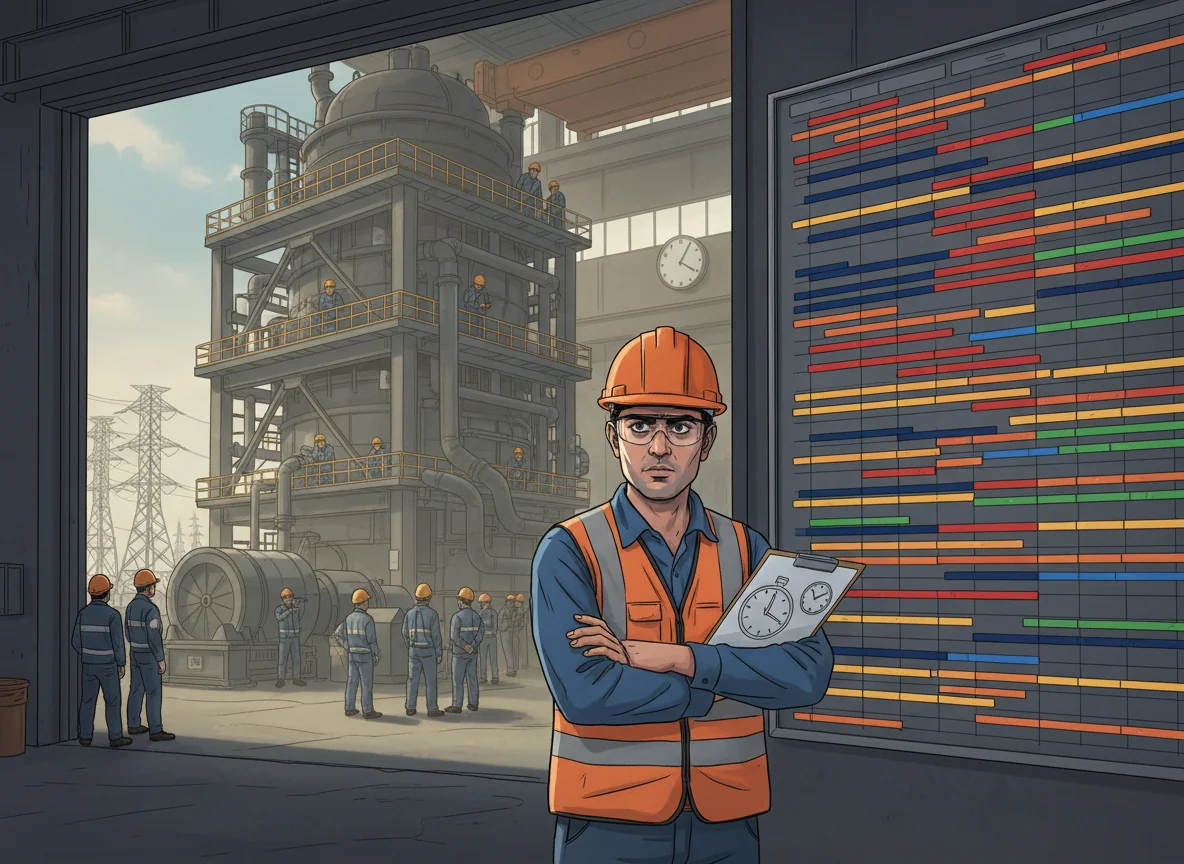
Look carefully at how a provider justifies its schedule. Are they explicitly factoring in:
- Shutdown, isolation, and cooling times for high-pressure boilers
- Sequential constraints across boiler, turbine, and balance-of-plant work fronts
- Permit-to-work procedures, safety inspections, and statutory clearances
- Weather contingencies and material logistics in remote locations
Boiler repair services in India that claim aggressive durations but cannot show project histories with similar units and fuels—supercritical vs subcritical, coal vs biomass, industrial vs utility boilers—are shifting schedule risk to the asset owner. The right question is not “How fast can you complete the work?” but “How many times have you safely achieved this duration on similar units?”
Organizations like Boilleo build timelines from first principles: crew loading curves, weld-inch productivity data, NDT capacities, and interface milestones with power cycle piping, electrical plants, and control systems. When a provider backs their dates with data, not optimism, your outage plan becomes bankable instead of aspirational.
Red Flag 3: Missing Integration Between Boiler, Piping, and Balance-of-Plant Systems
Boilers do not fail in isolation; they fail as part of a system. Yet many industrial boiler service providers in India still submit proposals as if the boiler is a standalone asset. That is a structural red flag for any modern power plant where steam generation, process piping, electrical systems, and control infrastructure are deeply intertwined.
Consider the interfaces that make or break an industrial boiler project:
- Power cycle piping: High-temperature, high-pressure lines, drains, vents, and attemperation circuits require specialist routing, welding, and stress analysis.
- Industrial process piping: Condensate recovery, feedwater, fuel oil, chemical dosing, and cooling water systems must be aligned with boiler operating regimes.
- Electrical and signaling: Illumination, earthing, signaling systems for cranes and rail sidings, and integration with substation or transformer yards.
When a provider cannot clearly articulate how their boiler work package interfaces with other plant systems—or they intend to defer those responsibilities to “others”—you inherit coordination risk. This often manifests as flange mismatches, rework on supports, delayed pressure tests, and contested responsibility during commissioning.
Boilleo’s approach is to treat each project as a plant, not a component: combining boiler erection, piping, mechanical works, and auxiliary installations under an integrated execution plan. When evaluating bids, prioritize vendors who demonstrate system-level thinking and have a track record across power plants, substations, and process facilities—not just boiler rooms.
Red Flag 4: Weak Manpower Strategies and Subcontractor Dependence
Under India’s conditions, equipment rarely delays a project—people do. A deceptively low price from industrial boiler service providers often hides an unspoken assumption: critical activities will be staffed through last-minute subcontractors and casual manpower, not stable, trained crews.
There are several warning signals:
- Resource plans that mention roles, but not headcounts or shift patterns
- No clarity on certified welders, riggers, boiler operators, or safety officers
- Heavy reliance on local labour contractors for specialized work
- Lack of documented training in boiler safety, confined-space entry, or hot work
For industrial boiler maintenance, shutdowns, and emergency boiler repair services in India, manpower is not a commodity. You need disciplined teams who understand power-plant constraints, OEM procedures, and statutory norms. The difference between a team that has executed multiple outages together and a crew assembled days before shutdown can be measured in rework rates, weld repair percentages, and safety incidents.
Boilleo’s power-plant projects typically blend in-house supervisors and engineers with vetted tradespeople from a structured civil and mechanical manpower pool. That allows rapid scaling during peak outage periods without sacrificing quality. When reviewing proposals, ask for a named organization chart, typical crew sizes by work front, and evidence of long-term employment or recurring deployment—not just CVs on paper.
Red Flag 5: No Transparency on Industrial Boiler Maintenance Cost Drivers
Many bids for boiler repair and maintenance appear attractive at first—and then bleed budgets through change orders, mobilization fees, and unforeseen material costs. A lack of transparency around industrial boiler maintenance cost drivers is a major red flag that procurement teams often underestimate.
Watch for pricing that:
- Lumps dissimilar activities (e.g., pressure-part replacements, refractory work, and insulation) into a single rate
- Omits critical consumables, temporary works, or NDT costs
- Provides no rate card for additional weld joints, tube replacements, or hydrotest repetitions
- Ignores OEM coordination, design modifications, or statutory inspection fees
A dependable provider will proactively break down your industrial boiler maintenance cost into scope-linked components: planned activities, contingency work, material vs labour, and third-party services. They should also be willing to model different outage scenarios—minimal repair, moderate overhaul, full refurbishment—and show the commercial impact.
Boilleo’s teams regularly support clients in India by converting lump-sum offers into transparent cost structures, tying each rupee to a defined task in the outage plan. That allows plant managers to defend budgets internally and avoid adversarial negotiations once scaffolding is already up and the unit is offline. If a vendor cannot explain their pricing logic in a 30-minute review, you should assume the risk sits with you, not them.
Red Flag 6: Poor Emergency Response Capabilities for Boiler Failures
Procurement often focuses on planned outages, but in the real world, industrial boiler service providers are tested during 2 a.m. tube leaks, drum level excursions, or forced outages due to auxiliary failures. Many companies market “24/7 support” without any operational mechanism to deliver it across India’s geography.
Key questions to expose this red flag include:
- Do you maintain pre-mobilized teams or just “on-call” phones?
- What is your actual response time to reach a remote site?
- Do you stock critical boiler tubes, valves, and fittings, or rely solely on OEM lead times?
- Can you rapidly deploy industrial process piping and power cycle piping crews together, or only boiler fitters?
Capturing emergency and problem-solution searches—like “boiler repair services India” or “urgent boiler tube leak support”—is not just an SEO strategy; it reflects a real operational need. Boilleo, for example, structures regional deployment hubs, pre-qualified manpower pools, and ready-to-mobilize toolkits to respond quickly when units trip unexpectedly.
When comparing partners, insist on documented emergency response protocols and sample incident reports from past events. A provider’s ability to stabilize your plant in crisis is as important as their efficiency during well-planned outages.
Red Flag 7: No Long-Term View on Steam Generation Reliability and Compliance
The final red flag is the hardest to quantify: a short-term, job-by-job mindset. Many industrial construction companies in India still treat boiler installation and maintenance as transactional work—finish the scope, demobilize, move on. But for power producers facing decarbonization pressures, stricter emission norms, and competitive PPA landscapes, the real value lies in consistent, long-term steam generation reliability.
Warning signs include:
- No interest in your long-range outage strategy or fleet profile
- Minimal discussion of performance KPIs like heat rate, availability, or forced outage rates
- Limited understanding of new technologies, digital monitoring, or predictive maintenance
- Silence on regulatory aspects—Boiler Act compliance, IBR inspections, or safety audits
In contrast, a strategic partner will help you build an asset-wide roadmap for boiler life extension, risk mitigation, and cost optimization across multiple units. Boilleo’s teams, for example, do not just execute industrial boiler installation; they also support clients on illumination and signaling systems, power plants, substation works, and critical piping upgrades—creating a holistic view of power-plant health.
When evaluating bids, ask providers how they would reduce your five-year industrial boiler maintenance cost per MWh, not just this year’s outage bill. If they cannot answer, you are talking to a contractor, not a partner.
Frequently Asked Questions
What should I look for in industrial boiler service providers for Indian power plants?
Focus on four pillars: technical depth, system integration capability, manpower quality, and execution track record in India. Providers should demonstrate experience with high-pressure utility boilers, power cycle piping, and balance-of-plant systems, not just small industrial units. Ask for detailed scopes, outage schedules, and completed project references on similar capacities and fuels. Evaluate their safety culture, statutory compliance under IBR and the Boiler Act, and their ability to respond to emergencies. Finally, ensure they can support you beyond a single outage, with a roadmap for reliability and lifecycle optimization.
How can I estimate realistic industrial boiler maintenance costs for my plant?
Start with a clear asset condition assessment and a defined outage scope—pressure parts, non-pressure parts, auxiliaries, controls, and piping. Request that vendors split industrial boiler maintenance cost into labour, materials, third-party services (NDT, scaffolding, inspections), and contingencies. Scenario planning is critical: build cost models for minimum repair, moderate overhaul, and major refurbishment. Include likely change items such as unexpected tube replacements or valve overhauls. Use historical outage data to benchmark rates and durations. A good partner, like Boilleo, will co-create this cost model with you instead of pushing opaque lump-sum offers.
Why is regular industrial boiler maintenance important for power producers?
Boilers sit at the heart of your steam generation system; their performance directly affects heat rate, fuel consumption, emissions, and unit availability. Skipping or under-scoping maintenance raises the risk of tube leaks, pressure-part failures, and unplanned outages, which can cost far more than planned interventions. In India, non-compliance with statutory inspection and maintenance norms can also lead to legal exposure. Regular, well-planned maintenance—integrated with power cycle piping, auxiliaries, and controls—extends asset life, stabilizes output, and reduces the total cost of ownership over a plant’s lifecycle.
How do I compare industrial boiler installation bids beyond just price?
Normalize all bids against the same technical scope, milestones, and quality standards. Compare level of detail in methodologies, commissioning support, safety provisions, and integration with existing plant systems. Check whether vendors have in-house design and engineering support or rely solely on OEMs and third parties. Evaluate their manpower plans, emergency response capability, and long-term support offerings. Request clarifications on exclusions, assumptions, and escalation clauses. A bid that appears 5–10% cheaper but is vague on scope and risk allocation often proves significantly more expensive once execution begins.
Can a single contractor handle boiler, piping, and auxiliary installations effectively?
Yes—if they are structured as an integrated industrial construction company with proven multi-disciplinary experience. The advantage of a partner like Boilleo is the ability to manage industrial boiler installation, power cycle piping, industrial process piping, electrical and signaling systems, and associated civil works under one execution framework. This reduces interface risk, accelerates decision-making, and simplifies accountability. However, you should still verify that their internal teams or aligned partners are competent in each discipline, with aligned quality systems and safety standards across the full scope.
Conclusion: Turning Boiler Procurement into a Strategic Advantage
Boiler failures rarely come from a single bad decision; they emerge from a chain of overlooked red flags—vague scopes, optimistic timelines, thin manpower, hidden costs, weak emergency response, and a short-term mindset. For Indian power producers, eliminating those red flags during vendor selection is one of the fastest ways to protect margins, improve availability, and reduce industrial boiler maintenance costs over time.
Use the seven warning signs in this article as a non-negotiable checklist when comparing industrial boiler service providers and industrial construction companies in India. Challenge every bidder to prove how they will integrate boiler, piping, electrical, and civil work; how they will respond under pressure; and how they will support your steam generation reliability for years, not just one outage.
If you want a benchmark to measure others against, start by mapping your next outage or installation plan with Boilleo Private Limited—then ask every other provider if they can match that level of clarity, integration, and accountability.
industrial boiler service providersindustrial boiler installationboiler repair services indiaindustrial boiler maintenance cost