It seems we can’t find what you’re looking for. Perhaps searching can help.
Power Plant Construction in India: 2026 Outlook for Thermal and Industrial Captive Plants
power plant constructionpower plant erection servicesindustrial plant installationheavy industrial construction services
By 2026, India’s power sector will be shaped less by megaproject announcements and more by execution speed, reliability, and smart integration of thermal assets. For decision-makers weighing new plants or major upgrades, the risk is no longer whether to invest—but when and how to commit capital in a volatile policy and cost environment.
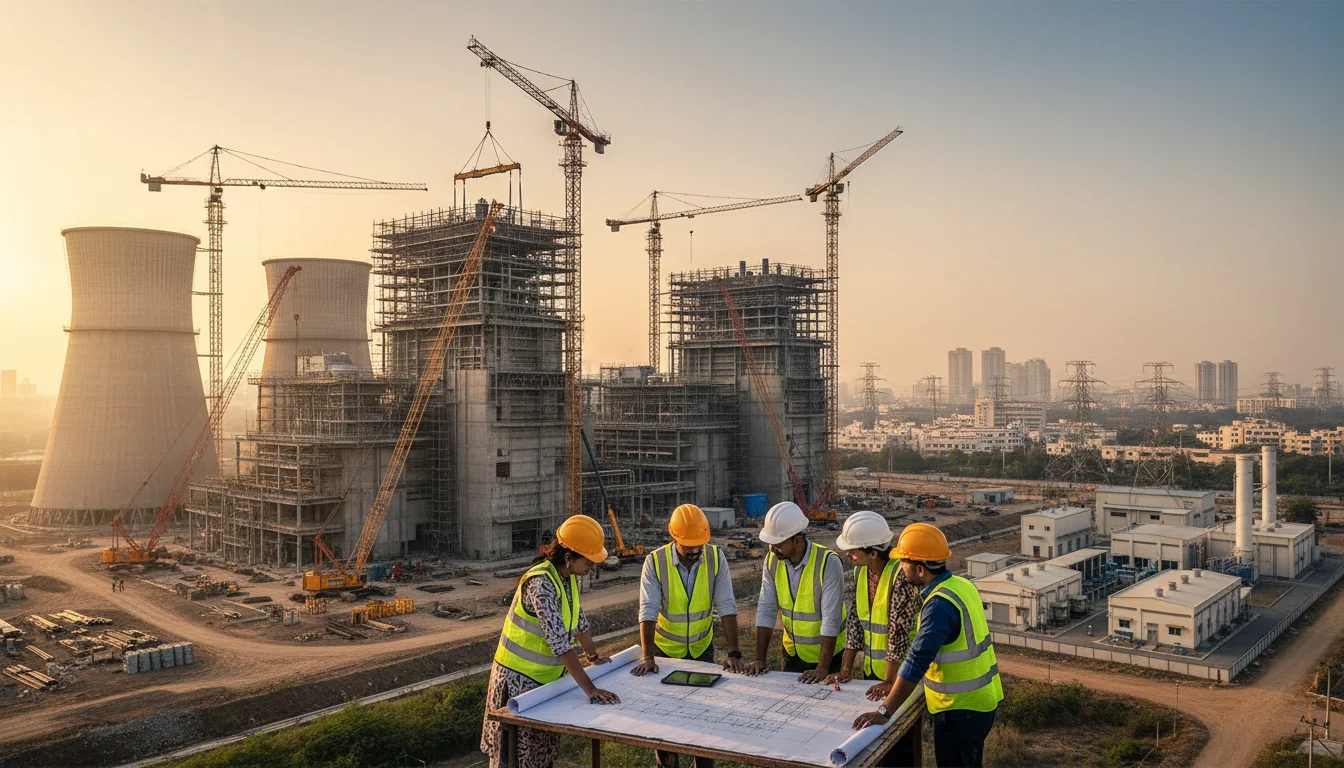
This outlook cuts through noise to map the power plant construction landscape across grid-connected thermal projects and industrial captive plants. It focuses on three questions executives actually ask: Where is capacity really growing? Which policy and regulatory shifts matter for project viability? And how will costs—particularly for EPC, piping, and boiler systems—move between now and 2026?
Across India, companies like Boilleo Private Limited sit at the fulcrum of this transition, combining industrial piping, boiler erection, and plant installation expertise for both utility and captive power. Understanding how these capabilities intersect with policy and pricing trends is now a strategic advantage, not a procurement detail.
For 2024–2026, the winners in power plant construction will be those who treat timing, configuration, and maintenance as a single investment decision—not three separate line items.
1. Where India’s Thermal and Captive Capacity Is Really Headed by 2026
India’s installed power capacity is diversifying, but thermal remains the backbone. As of 2024, coal and lignite still account for roughly 55–60% of installed capacity and about 70% of actual generation. By 2026, that share will taper—but not collapse—amid rapid renewables growth.
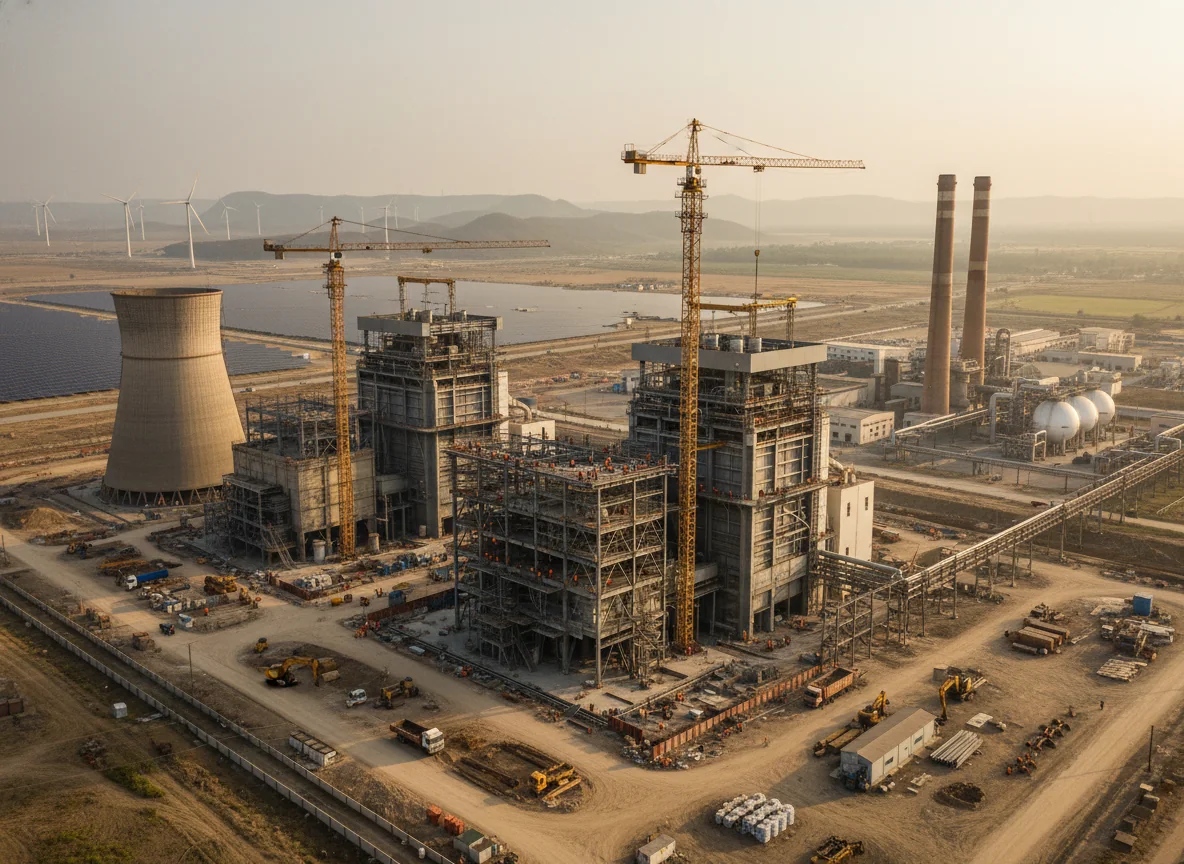
Thermal additions. Central and state utilities are prioritising a smaller set of high-efficiency, supercritical projects and brownfield expansions. The government has signalled that 50–60 GW of new coal may be required through 2030 to support baseload and grid stability. A meaningful slice of this will enter construction or advanced planning by 2026, with emphasis on faster, modular execution and retrofits rather than greenfield sprawl.
Industrial captive plants. This is where the most dynamic growth lies. Energy-intensive sectors—steel, cement, chemicals, refineries, data centres, and large manufacturing clusters—are increasingly turning to industrial captive plants and cogeneration for three reasons: supply reliability, cost visibility, and process integration (particularly steam and heat recovery).
By 2026, captive and group captive projects in the 15–200 MW range, often co-located with process plants, are expected to form a growing share of thermal EPC pipelines. These will rely heavily on precise power plant erection services, industrial process piping, and advanced boiler systems to meet both power and steam requirements.
Key takeaway: Utility-scale coal may grow slowly, but the real action is in hybrid, efficient, captive thermal assets closely integrated with industrial processes.
2. Policy, Regulation, and Carbon: The New Rules of the Investment Game
Policy will not make or break thermal investments in India by 2026—but it will determine whether a plant’s economics are resilient or fragile. Three clusters matter most: emissions regulation, grid and open access rules, and industrial decarbonisation pressures.

Emissions and efficiency. India’s tightening norms on SO2, NOx, and particulate emissions are pushing both utilities and industries toward high-efficiency boilers, better flue gas treatment, and robust power plant maintenance regimes. Plants that underinvest in boiler integrity, piping reliability, and control systems will face deratings, unexpected outages, and compliance risk.
Open access and captive rules. Evolving regulations around group captive and open access are reshaping the economics of industrial power. Incentives for renewable procurement will coexist with continued need for reliable thermal backup and process steam. The most resilient strategy for heavy industry through 2026 will likely be hybrid: a mix of renewable PPAs, high-efficiency captive thermal, and aggressive energy efficiency.
Carbon pressure. While a formal price on carbon in India remains limited, global supply-chain expectations and export-facing sectors (e.g., steel under the EU CBAM regime) are already treating CO2 intensity as a cost. This favours new thermal capacity that is: 1) highly efficient, 2) cogeneration-ready, and 3) designed for future fuel flexibility where possible (biomass blends, waste heat recovery, etc.).
In this environment, engineering partners who understand both emissions compliance and process integration—like Boilleo with its industrial steam generation and boiler installation expertise—become central to project bankability.
3. Cost Trends in Power Plant Construction and Erection Services to 2026
Power plant construction costs in India between now and 2026 will be shaped less by headline EPC prices and more by four drivers: commodity volatility, skilled labour, technology choices, and maintenance philosophy.
Core EPC and mechanical costs. Steel and alloy prices have stabilised from their 2021–22 peaks but remain structurally higher than the 2010s, affecting boiler shells, pressure parts, and extensive power cycle piping solutions. For greenfield thermal projects, developers should plan for total EPC costs in a band that is 10–20% above pre-pandemic baselines, with industrial plant installation and heavy lifting forming a visible share.
Labour and specialist services. Skilled welders, pipe fitters, and high-pressure boiler erection teams are a constraint in several regions. This will put a premium on companies that can mobilise integrated mechanical solutions and civil manpower supply quickly, reducing idle time and claims.
Technology and O&M. Plants that invest upfront in robust boiler installation, high-quality industrial piping solutions, and predictive maintenance instrumentation typically reduce unplanned outage costs by 20–30% over the asset life. Given tightening margins, lifecycle cost is now as critical as day-one capex.
For new thermal and captive plants, the most realistic planning assumption is modestly elevated capex through 2026—but significantly lower O&M risk if mechanical and piping work is executed to high standards.
In practice, that favours builders with deep expertise in power plant erection services, boiler systems, and process piping, rather than lowest-bid, fragmented contracting.
4. Strategic Timing: When to Start New Thermal and Captive Projects Before 2026
Timing new power plant construction in India is now a strategic discipline. Between 2024 and 2026, three windows matter for decision-makers considering thermal or captive investments.
1. Early movers (2024–mid 2025). Projects that reach financial close and award EPC/mechanical packages in this window can still secure relatively favourable prices before the next commodity or labour squeeze. They also position assets to commission around 2027–2028, aligning with growing industrial demand and grid integration of renewables.
2. Fast-followers (late 2025–2026). These projects will benefit from clearer visibility on emissions norms enforcement and grid tariffs, but may face tighter execution capacity and slightly higher mechanical and piping costs. For them, proven partners with repeatable execution models—especially for boiler installation and power cycle piping—will be essential to hold schedules.
3. Opportunistic upgrades and retrofits. Not every strategic move requires a new plant. Between now and 2026, many industrial players will get more value from debottlenecking existing captive units: upgrading boilers, rerouting or enlarging steam lines, integrating waste heat, or adding backup generation.
The decision framework is simple but unforgiving: if your industrial growth plan relies on more than 20–25% additional reliable power or steam by 2028, you should be scoping and pre-engineering options now, not when grid constraints or outages force emergency action.
5. What Services Do Industrial Construction Companies in India Actually Provide?
Industrial construction companies in India typically offer an end-to-end suite of services that spans engineering, erection, and lifecycle support for complex plants. Understanding this list of services offered by industrial construction companies in India helps buyers scope projects correctly and avoid costly gaps.
Core service categories usually include:
- Power plant construction: civil works, structural steel, boiler and turbine foundations, cooling towers, chimneys.
- Power plant erection services: mechanical erection of boilers, turbines, generators, condensers, and balance-of-plant equipment.
- Industrial plant installation: mounting, alignment, and commissioning of process equipment, rotating machinery, and auxiliary systems.
- Industrial piping solutions: design and installation of high-pressure steam lines, process piping, fuel oil lines, fire-fighting networks, and utility piping.
- Electrical and instrumentation: installation of illumination systems, switchgear, transformers, control panels, and signalling systems.
- Boiler installation and maintenance services: erection, retrofits, efficiency upgrades, and emergency boiler repair.
- O&M and shutdown support: planned outages, inspections, and power plant maintenance.
Boilleo Private Limited operates across this spectrum, with distinctive depth in industrial process piping, illumination and signalling for critical infrastructure, and installation of power, transformer, telecommunication, and radar plants—capabilities that map directly to modern thermal and captive power needs.
6. Boilleo’s Edge: Industrial Steam, Piping, and Boiler Expertise for 2026 Projects
For developers and industrial operators, the risks in power plant projects rarely sit in the glossy EPC contract—they live in the details of steam generation, piping, and boiler reliability. This is where Boilleo Private Limited’s capabilities intersect directly with 2026’s most pressing needs.
Industrial steam generation and boiler installation. Industrial steam generation is the process of producing high-quality steam at specific pressures and temperatures to serve turbines and process loads. Boilleo’s expertise in boiler erection, auxiliary systems, and integration with process plants allows industrial clients to design captive units that serve both power and process efficiently.
Power cycle piping and process networks. Power cycle piping solutions connect boilers, turbines, condensers, and feedwater systems. Poor design or execution here is a leading cause of leaks, efficiency loss, and unplanned outages. Boilleo’s industrial process piping work—from high-pressure steam lines to condensate return and fuel systems—targets exactly these failure points.
Critical signalling and electrical systems. Installation of illumination and signalling systems for roads, railways, airports, and harbours, as well as electric power and transformer plants, gives Boilleo practical experience in high-reliability environments. For power plants, that translates into more robust electrical and control installations.
Boilleo’s practical edge lies in treating boilers, piping, and electrical systems as one integrated reliability problem—not three separate scopes to be value-engineered in isolation.
7. From Construction to Lifecycle Value: Designing Plants for Maintenance and Upgrades
Investors often obsess over EPC timelines and miss the value locked in power plant maintenance, emergency response, and upgrade flexibility. By 2026, the plants that outperform will be those designed from day one for safe, rapid inspection, repair, and modification.
Boiler maintenance services. Boiler maintenance services include periodic inspections, tube cleaning and replacement, valve and safety device checks, efficiency tuning, and emergency outage response. Plants that embed such regimes from commissioning typically see 1–2 percentage point higher availability over their life compared with reactive-maintenance peers.
Emergency and problem-solution boiler repair. When a boiler tube fails or a critical header leaks, the difference between a three-day and a three-week outage is often whether industrial construction partners can mobilise quickly with the right civil manpower supply, materials, and welding procedures. Boilleo’s field experience in emergency repair and shutdown support directly addresses this risk.
Designing for future upgrades. Executives planning for 2026 should ask during design: Can this plant accommodate a future efficiency upgrade, fuel flexibility, or added process steam capacity? Flexible routing and sizing of key piping, accessible boiler layouts, and modular auxiliary systems all make upgrades cheaper and faster later.
In other words, power plant construction is no longer a one-time project—it is the first chapter in a 25–30 year story of maintenance, optimisation, and adaptation.
Frequently Asked Questions
What are the main types of power plant construction projects in India today?
The main types are: 1) utility-scale thermal plants (coal and gas) that feed the national and state grids; 2) industrial captive and cogeneration plants located within or near factories to supply both power and steam; and 3) hybrid or supporting assets such as auxiliary boilers, backup generators, and process steam plants. While renewables are expanding rapidly, thermal projects—especially captive units in the 15–200 MW range—remain essential for baseload reliability, high-temperature process needs, and grid stability. Many new projects through 2026 will be brownfield expansions or modern replacements of aging, inefficient units.
How do I choose a partner for power plant erection services and industrial plant installation?
Start by evaluating three factors: technical depth, execution track record, and lifecycle support. Technically, your partner should demonstrate proven experience in boiler erection, power cycle piping, heavy lifting, and alignment of rotating equipment. Execution-wise, look for on-time completion data and safety performance across multiple sites. Finally, prioritise companies that also offer maintenance, emergency repair, and upgrade services, not just one-off construction. Firms like Boilleo that combine mechanical solutions, civil manpower supply, and electrical and signalling installation can reduce interface risks and keep your schedule and budget under control.
Why is boiler maintenance so important for thermal and captive plants?
Boiler maintenance is the single most important determinant of reliability and efficiency in a thermal power or industrial steam plant. Neglected boilers suffer from tube fouling, corrosion, leaks, and unsafe operating conditions, leading to unplanned shutdowns and higher fuel consumption. Regular inspections, cleaning, tube and valve replacement, and safety system checks can improve availability by 1–2 percentage points and reduce forced outages by up to 30%. For captive plants that support continuous industrial processes, a major boiler failure can halt production entirely, making structured maintenance a core business continuity strategy—not just a compliance requirement.
What is included in industrial piping solutions for power and process plants?
Industrial piping solutions typically cover the full lifecycle of piping systems: design, material selection, prefabrication, installation, testing, and commissioning. In power and process plants, this includes high-pressure steam lines, feedwater and condensate systems, fuel oil and gas lines, cooling water networks, fire-fighting pipelines, compressed air, and various process fluids. Quality in piping work directly affects plant safety, efficiency, and maintainability. Companies like Boilleo specialise in industrial process piping for both power cycles and complex plants, ensuring correct routing, support, stress management, and weld integrity so systems operate reliably under thermal and pressure cycling.
How will power plant construction costs in India likely change by 2026?
Between now and 2026, most developers should expect power plant construction costs to remain 10–20% above pre-2020 levels, driven by higher steel and alloy prices, tighter skilled labour availability, and stricter technical standards. However, better engineering, modular construction, and integrated mechanical and piping packages can offset some of this pressure through shorter schedules and fewer rework cycles. The biggest lever is lifecycle thinking: investing in high-quality boiler installation, piping, and maintenance systems upfront tends to reduce operating and outage costs significantly over the 25–30 year life of the plant.
Conclusion: How Decision-Makers Should Act Between Now and 2026
For executives in utilities and heavy industry, the 2026 horizon is less about betting on coal versus renewables and more about building the right thermal and captive assets, at the right time, with the right partners. Thermal will remain core to India’s power mix and industrial competitiveness, but the margin for design and execution errors is shrinking.
The most resilient strategies will: 1) prioritise high-efficiency thermal and industrial steam generation integrated with process needs; 2) treat piping, boilers, and maintenance as strategic levers, not afterthoughts; and 3) work with industrial construction companies that can deliver integrated power plant erection services, industrial plant installation, and long-term boiler maintenance.
Boilleo Private Limited is positioned squarely in this intersection—where power plant construction meets industrial piping, boiler reliability, and critical infrastructure installation. For organisations planning new thermal or captive capacity, the time to scope options, benchmark partners, and design for lifecycle value is now, not when the grid or your production lines force your hand.
power plant constructionpower plant erection servicesindustrial plant installationheavy industrial construction services