It seems we can’t find what you’re looking for. Perhaps searching can help.
Mechanical Solutions for Power Plants: Choosing Partners for High-Impact Upgrade Packages
mechanical solutions for power plantsindustrial mechanical solutions providerspower plant equipment failure repairaging power plant infrastructure upgrade
Every Indian plant owner knows the silent crisis: units that still run, but no longer compete. Heat rate steadily worsens, forced outages creep up, and capex budgets are squeezed just when the grid demands more. The question is no longer whether to invest in mechanical upgrades for power plants, but how to choose partners and packages that actually move the needle on efficiency and reliability.
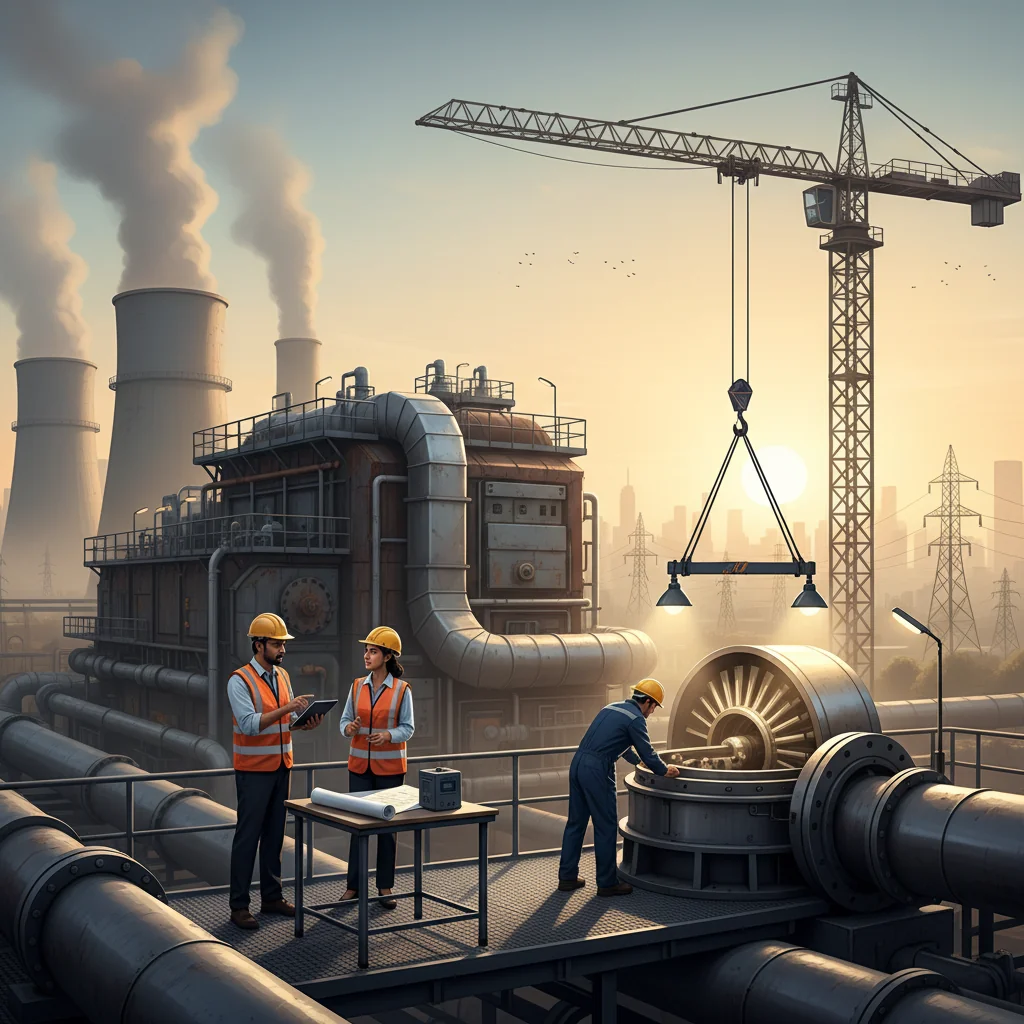
This article focuses on one sharp idea: treat mechanical upgrades as a portfolio of high-impact bets, not a shopping list of parts. We will look at which packages matter most for heat rate and reliability, how to evaluate industrial mechanical solutions providers, and why Indian plants need a different retrofit playbook than Europe or the US. Throughout, we reference the kind of work companies like Boilleo Private Limited execute across power cycle piping, boiler systems, industrial steam generation, and balance-of-plant upgrades.
For aging Indian plants, the best mechanical upgrade packages deliver 2–5% heat rate improvement and 30–50% forced outage reduction within a 3–5 year payback window.
1. Why Mechanical Solutions for Power Plants Now Decide Competitive Advantage
The direct answer is: mechanical solutions for power plants now determine who survives the next decade of Indian grid competition because they control three levers—heat rate, reliability, and operational flexibility. Fuel costs and renewable penetration are tightening margins so fast that a 2–3% heat rate penalty can erase an entire year’s profit.
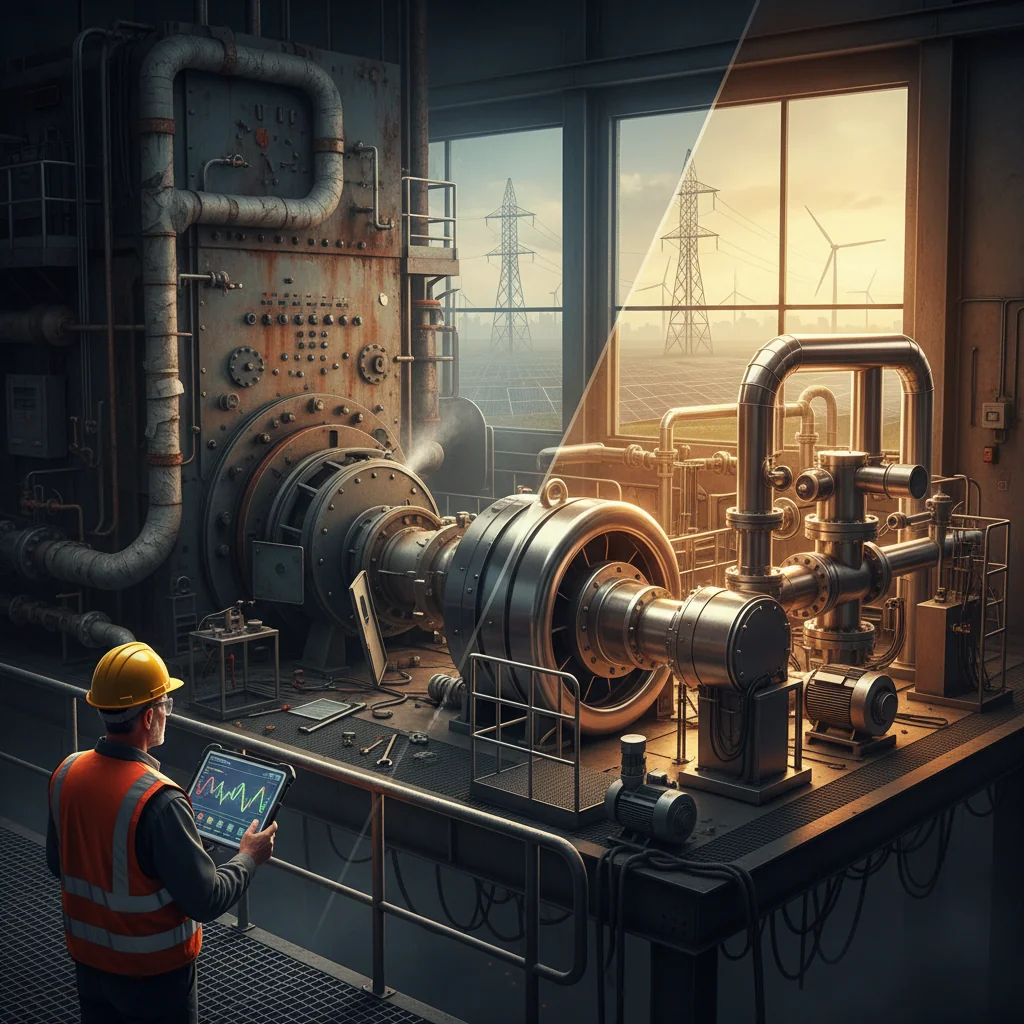
Mechanical solutions for power plants are the engineering, construction, and upgrade interventions on boilers, turbines, piping, auxiliary systems, and structural works that directly influence thermodynamic performance and uptime. They include industrial process piping, boiler and balance-of-plant retrofits, emergency power plant equipment failure repair, and lifecycle extension projects.
Globally, utilities that systematically upgraded aging infrastructure reported heat rate improvements of 3–6% and forced outage reductions of 20–40% over five years. In India, the spread is wider: some stations still operate with design-era metallurgy, obsolete valves, and unoptimized steam paths that add 5–7% hidden losses.
The strategic implication is simple:
- Plants within the same state and fuel basket now compete primarily on O&M discipline and upgrade strategy.
- Mechanical retrofits can often defer full replacement by 10–15 years while aligning with emission and safety regulations.
- Well-chosen packages increase a plant’s ability to ramp up and down—critical for a grid with rising solar and wind penetration.
Mechanical upgrades are no longer maintenance overhead; they are the cheapest megawatts you can “build” by reclaiming efficiency and uptime in assets you already own.
2. Mechanical Upgrade Options for Power Plants: The High-Impact Shortlist
The most effective mechanical upgrade options for power plants fall into five categories that repeatedly show strong returns in Indian conditions: boiler and firing upgrades, power cycle piping and valves, turbine-path improvements, auxiliary system optimization, and structural/lifecycle extension works.
Instead of looking at dozens of line items, focus on these high-impact upgrade families:
- Boiler and combustion upgrades
Includes pressure part replacement, advanced burners, improved soot blowing, and better feedwater control. Typical impact: 1–3% heat rate gain, reduced slagging/fouling, lower unplanned outages. - Power cycle piping and valve retrofits
Involves redesigning steam and condensate routes, replacing eroded piping, and installing modern isolation and control valves. Impact: reduced pressure drops, fewer leaks, and safer operation at higher loads. - Turbine and steam path upgrades
From nozzle and blade replacement to sealing improvements and rotor overhauls. Impact: 1–2% efficiency gain and more stable operation during ramps. - Auxiliary system retrofits
Fans, pumps, cooling towers, and compressed air systems. Impact: lower auxiliary power consumption (often 0.5–1.5% net plant efficiency). - Mechanical integrity and lifecycle extension
Structural strengthening, supports, hangers, welding rehabilitation, and corrosion mitigation.
Companies like Boilleo that combine industrial piping solutions, boiler installation, civil manpower supply, and mechanical solutions are well-positioned to package these into integrated outage projects.
If an upgrade does not improve heat rate, extend asset life, or reduce forced outages, it should not be in your top-tier mechanical retrofit plan.
3. High-Impact Mechanical Retrofits for Indian Plants: What Actually Moves Heat Rate and Reliability
The highest-impact mechanical retrofits for Indian plants are those tuned to local realities: coal quality variability, water constraints, legacy construction practices, and tight outage windows. Three retrofit themes consistently deliver meaningful heat rate and reliability improvements.
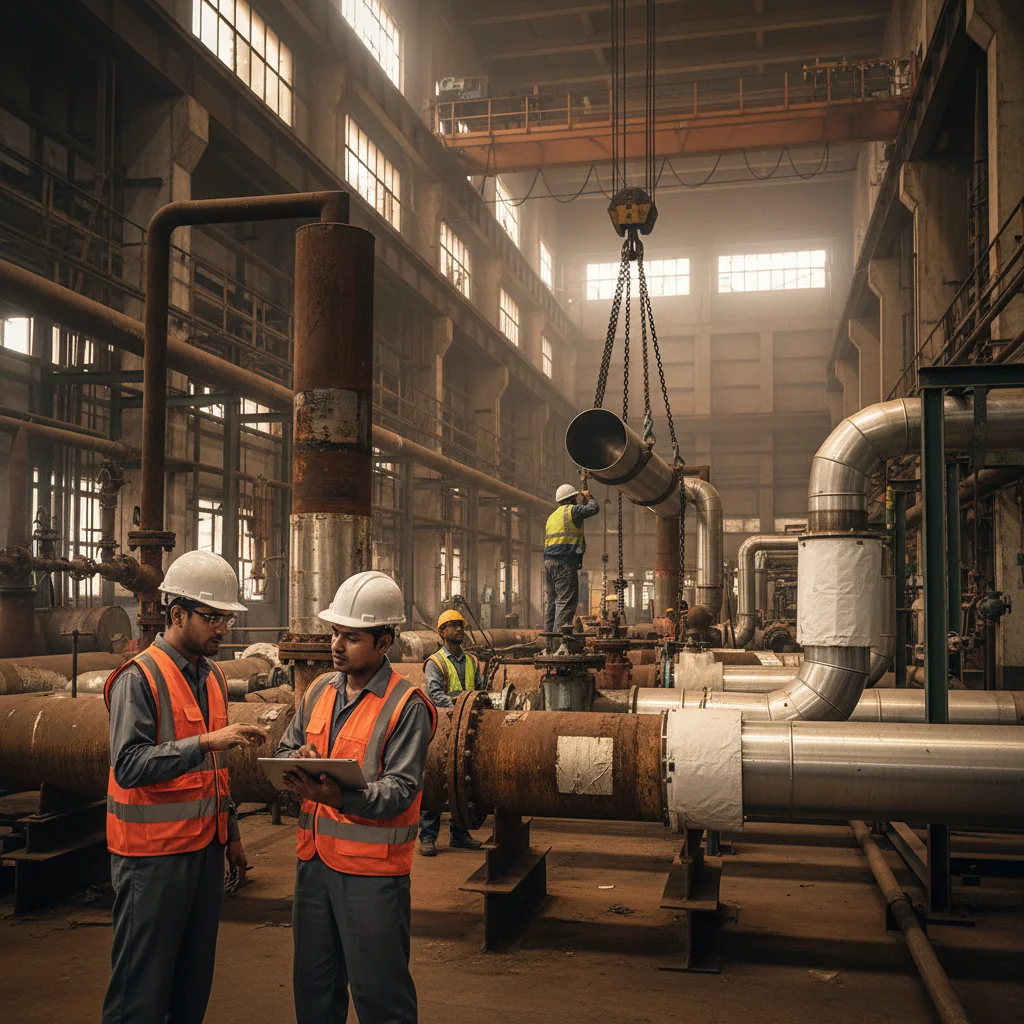
1. Power cycle piping re-engineering
Power cycle piping—high-pressure steam, hot reheat, feedwater, and condensate lines—often suffers from decades of patch repairs. Replacing undersized or eroded sections, redesigning problem elbows, and upgrading hangers/supports can lower pressure drops and remove chronic leak points. Plants typically record 0.5–1% heat rate improvement plus reduced safety risk.
2. Boiler pressure part and header rehabilitation
Targeted replacement of economizer, water wall, and superheater coils, along with header rework, tackles tube failures that cause forced outages. With modern materials and weld procedures, outage frequency can drop by 30–50%.
3. Auxiliary efficiency packages
Retrofitting ID/FD/PA fans, condensate and boiler feed pumps, and cooling tower drives with high-efficiency equipment and VFDs reduces auxiliary power consumption. In many Indian units, this alone yields 0.5–1.5% net plant efficiency gain with 2–4 year payback.
These are not cosmetic projects. They require integrated mechanical, civil, and piping capabilities—the type of multidisciplinary approach Boilleo brings to industrial steam generation and boiler maintenance services.
For Indian plants, the winning retrofit strategy is not exotic technology, but disciplined elimination of chronic mechanical losses that have been normalized over decades.
4. How to Choose Mechanical Solutions Providers for Upgrades and Retrofits
To choose mechanical solutions providers for upgrades, evaluate them on one criterion above all: their ability to convert complex plant problems into integrated, outage-safe upgrade packages with measurable performance guarantees.
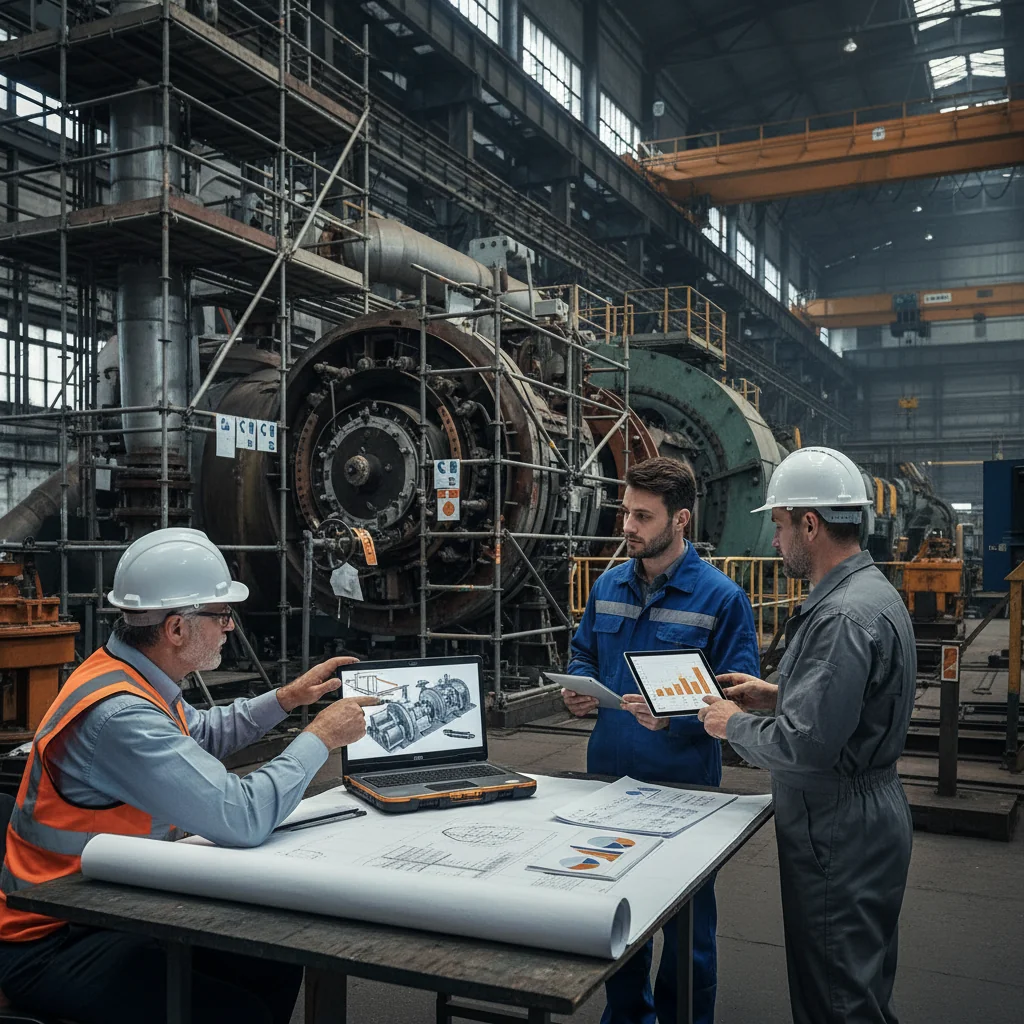
Five practical filters separate commodity contractors from strategic partners:
- Domain fit
Look for clear expertise in power plants, not generic fabrication. Experience in boiler installation, power cycle piping solutions, and power plant equipment failure repair is non-negotiable. - Integrated capabilities
Top providers combine mechanical solutions, industrial piping solutions, electrical and instrumentation interfaces, and civil manpower supply. This reduces coordination risk during tight outages. - Track record with aging infrastructure
Ask for case studies of similar vintage units, especially where retrofits extended life by 10+ years or delivered >2% heat rate improvements. - Execution discipline
Check their safety statistics, QA/QC systems, welding qualifications, and ability to work under live-plant constraints. - Commercial and risk model
Strong partners are prepared to link part of their compensation to availability, leak reduction, or heat rate metrics.
Indian industrial mechanical solutions providers like Boilleo that routinely handle installation of electric power plants, transformer plants, and industrial process piping bring a systems-level understanding rare among pure-play contractors.
The right mechanical solutions provider is less a vendor and more an extension of your engineering and planning team during every critical outage.
5. From Failure Repair to Strategic Retrofit: Rethinking Power Plant Equipment Failure Response
The fastest way to waste capex is to treat every breakdown as an isolated event. Power plant equipment failure repair should evolve from emergency patches to a trigger for structural mechanical improvements.
A modern approach has three steps:
- Root-cause diagnosis, not just replacement
For each major failure—tube leak, pipe rupture, valve seizure—insist on a formal RCFA (Root Cause Failure Analysis). Many repeating failures trace back to poor supports, vibration, misalignment, or outdated materials. - Bundled upgrade planning
Use each failure as a data point in a rolling 3–5 year mechanical upgrade roadmap. When a section of power cycle piping fails, evaluate the entire circuit and plan package replacement with pressure-drop and reliability gains. - Partnering with upgrade-capable contractors
Choose providers whose teams are comfortable shifting from "replace-in-kind" repairs to redesign and retrofit. This is where companies with experience in industrial steam generation, boiler maintenance services, and industrial construction companies India-wide add disproportionate value.
Plants that codify this approach typically see a transition from frequent unplanned outages to scheduled, upgrade-rich outages within three years.
Every failure is an invoice from your plant’s past design decisions. Strategic operators pay the bill once—by upgrading the system, not just the failed component.
6. Building a Mechanical Upgrade Roadmap: Prioritizing Heat Rate and Reliability
A mechanical upgrade roadmap is a 3–7 year plan that sequences projects to maximize cumulative heat rate and reliability gains within realistic outage and capex limits. Without it, upgrades become fragmented and underwhelming.
A practical roadmap design process follows five steps:
- Baseline the plant
Document current heat rate, auxiliary power consumption, forced outage rate, and chronic failure modes. Include boiler performance, turbine efficiency, and power cycle piping condition assessments. - Quantify upgrade levers
Estimate the heat rate and reliability impact of each potential mechanical package—e.g., “Boiler pressure part rehab: +1.5% heat rate, -40% tube leak outages.” - Score by impact vs. complexity
Rank projects using a simple matrix: heat rate impact, reliability uplift, outage duration required, and execution complexity. - Phase by outage windows
Cluster high-impact but complex projects (like major boiler or piping overhauls) into planned long outages; bundle quick-win auxiliary retrofits into shorter windows. - Lock in partners early
Engage mechanical solutions providers like Boilleo early for constructability reviews and realistic scheduling.
For many subcritical Indian units, a well-designed roadmap can realistically target 3–5% heat rate improvement and 50% forced outage reduction over five years without greenfield-scale capex.
A disciplined upgrade roadmap converts scattered repair spend into a coherent investment thesis for the next decade of plant operation.
7. Why Partners Like Boilleo Matter: Execution, Not Just Engineering
The best mechanical upgrade concepts die on the ground if your partner cannot execute under Indian site realities—tight outages, live systems, weather, regulatory inspections, and local labor dynamics. This is where companies like Boilleo Private Limited differentiate themselves.
Boilleo’s positioning along the full value chain—industrial process piping work, installation of power and transformer plants, telecommunication and radar plants, illumination and signaling systems, and comprehensive mechanical solutions with civil manpower supply—means it can act as a single point of responsibility for complex retrofit packages.
For a plant owner, this translates to three advantages:
- Systems thinking: Upgrades to boiler installation, power cycle piping, and auxiliaries are designed as one coherent package, not isolated jobs.
- Reduced interface risk: Mechanical, civil, and construction interfaces are handled internally, reducing coordination failures that extend outages.
- Lifecycle focus: Boilleo’s involvement in erection, maintenance, and upgrade services across sectors gives it a long-view perspective on lifecycle cost, not just lowest bid.
As Indian utilities seek partners rather than project-by-project vendors, industrial construction companies India-wide that can offer such integrated capabilities will be central to the country’s next wave of power plant modernization.
The difference between an average and a great mechanical upgrade is rarely in the specification sheet; it lies in the execution capability of the partner standing inside your plant at 2 a.m. on outage day.
Frequently Asked Questions
What are the most effective mechanical upgrade options for power plants?
The most effective mechanical upgrade options for power plants are those that directly improve heat rate and reduce forced outages. In practice, this means targeted boiler and combustion upgrades, power cycle piping and valve retrofits, turbine steam path improvements, high-efficiency auxiliary equipment replacements, and structural or lifecycle extension works. Plants that prioritize these five areas typically see 3–5% heat rate improvement and 30–50% reduction in forced outages over several years, without requiring greenfield-level capex. The key is to treat them as integrated packages executed during planned outages, not as isolated maintenance tasks.
How do I choose mechanical solutions providers for upgrades and retrofits?
Start by checking sector fit: your provider should have a deep track record in power plants, not just generic fabrication. Next, evaluate integrated capabilities—mechanical works, industrial piping solutions, and civil manpower supply under one roof reduce interface risks. Ask for case studies on aging units similar to yours, with quantified heat rate and reliability improvements. Review their safety record, QA/QC processes, and ability to plan and execute within tight outage windows. Finally, favor partners willing to link part of their compensation to performance metrics such as availability, leak reduction, or efficiency gains.
Why are high-impact mechanical retrofits so important for Indian plants?
Indian plants face a unique mix of challenges: variable coal quality, increasing renewable penetration, tightening environmental norms, and capex constraints. High-impact mechanical retrofits allow owners to reclaim lost efficiency and reliability from existing assets instead of building new capacity. Upgrades to boilers, power cycle piping, and auxiliaries can deliver 2–5% heat rate gains and major reductions in forced outages. That directly improves merit order position, reduces fuel costs, and increases the plant’s ability to ramp with the grid—all critical for competitiveness in the coming decade.
What role do industrial mechanical solutions providers play in emergency repairs?
Industrial mechanical solutions providers are crucial in turning emergency power plant equipment failure repair into an opportunity for structural improvement. Instead of executing simple like-for-like replacements, capable providers perform root-cause analysis, propose design or material upgrades, and help integrate each repair into a longer-term mechanical upgrade roadmap. They can mobilize skilled manpower quickly, work safely under live-plant constraints, and coordinate with OEMs and plant engineering teams. Over time, this approach shifts the plant from reactive maintenance to strategic retrofit planning.
How does boiler maintenance fit into a long-term mechanical upgrade strategy?
Boiler maintenance is the foundation of any mechanical upgrade plan because boiler performance dominates plant efficiency and outage risk. Regular inspections, tube thickness measurements, and failure pattern analysis identify where pressure part replacements, header rehabilitations, or burner upgrades will have the highest impact. Instead of treating maintenance as a cost center, leading plants integrate boiler maintenance services into a 3–5 year upgrade roadmap, bundling high-impact works into major outages. This yields predictable, compounding gains in heat rate, safety, and reliability.
When should plant owners start planning lifecycle extension projects?
Lifecycle extension planning should begin well before end-of-design life—ideally once major components cross 60–70% of design life or when forced outage trends start rising. Early planning allows for detailed inspections of boilers, turbines, and power cycle piping, followed by phased upgrades during scheduled outages. Partnering with experienced industrial construction companies in India, such as Boilleo, helps owners quantify remaining life, prioritize mechanical solutions, and sequence projects to minimize downtime. Waiting until failures become frequent usually results in rushed, fragmented capex that fails to deliver full value.
Conclusion: Turning Mechanical Upgrades into a Strategic Advantage
Mechanical upgrades are no longer about keeping old equipment running; they are about turning existing plants into sharper, leaner, more flexible assets that can survive—and win—in an increasingly competitive Indian power market. The path forward is clear: focus on a shortlist of high-impact mechanical retrofit packages, design a disciplined multi-year roadmap, and choose partners who can execute under real-world Indian site conditions.
Industrial mechanical solutions providers like Boilleo Private Limited, with integrated capabilities across power cycle piping, boiler installation, industrial steam generation, and civil manpower supply, are positioned to be not just contractors but strategic allies. For plant owners, the next strategic capex decision is simple: invest in upgrades that measurably improve heat rate and reliability, and choose partners who can deliver those outcomes—not just drawings.
mechanical solutions for power plantsindustrial mechanical solutions providerspower plant equipment failure repairaging power plant infrastructure upgrade