It seems we can’t find what you’re looking for. Perhaps searching can help.
Inside Boiler Commissioning: What Boilleo Private Limited Checks Before First Fire
industrial boiler installationboiler maintenance servicesBoilleo Private Limitedpower plant construction
Most boiler failures are not random. They are commissioned into existence—baked in during the frantic weeks before first fire. For owners of power plants, process industries, and large infrastructure projects, that moment when a new industrial boiler lights for the first time is either the start of decades of reliable steam… or the countdown to a catastrophic shutdown.
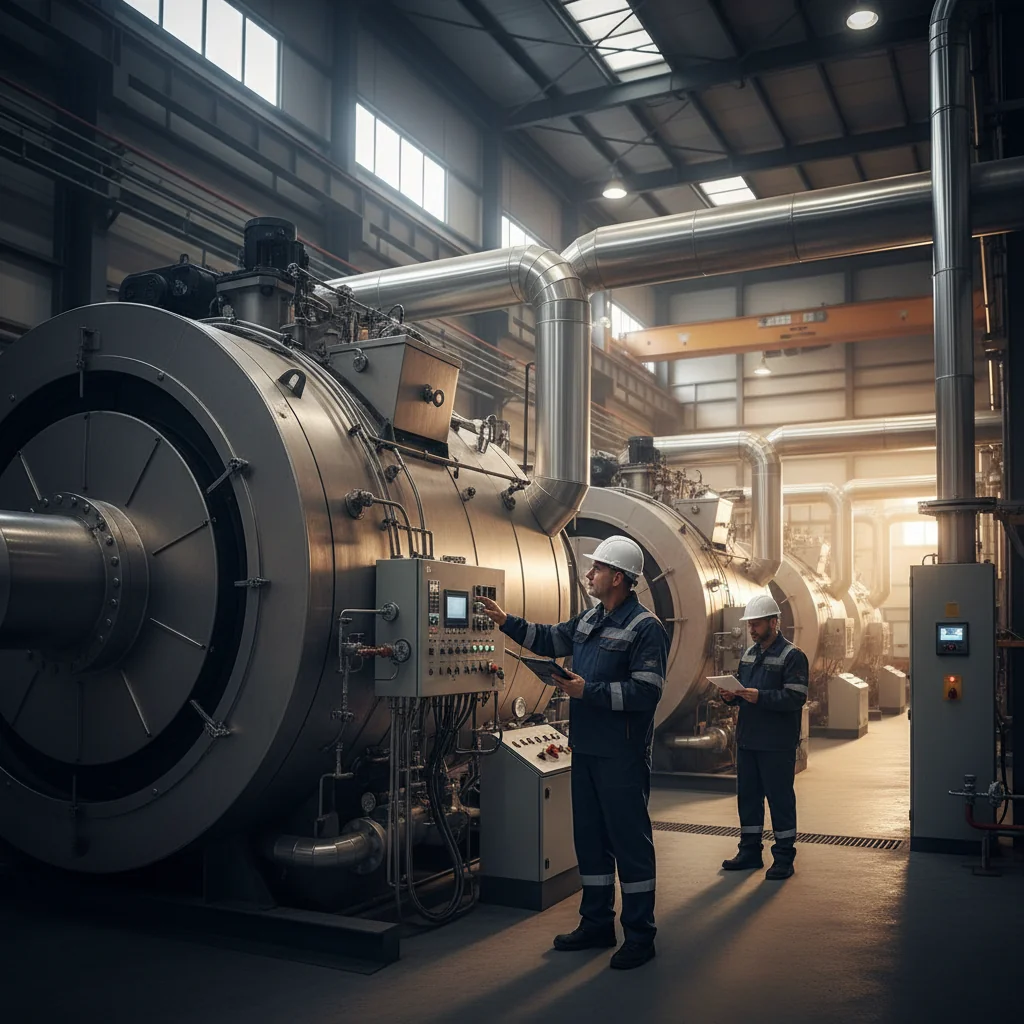
Boilleo Private Limited approaches boiler commissioning as a high-stakes risk elimination exercise, not a ceremonial milestone. In India’s fast-growing industrial construction landscape, the company has built a reputation for forensic-level QA/QC on power cycle piping, industrial boiler installation, and balance-of-plant systems. This article walks through Boilleo’s 25+ point commissioning logic—what gets checked, why it matters, and how owners can use it to demand better standards from any contractor.
Think of it as an insider’s blueprint: if these questions aren’t being asked before first fire, your project is under-commissioned and over-exposed.
What does boiler commissioning entail for a new industrial plant?
Boiler commissioning is the structured process of verifying, testing, and documenting that a new steam-generating system is safe, compliant, and ready for continuous operation at design performance. For a new industrial plant, it bridges the gap between mechanical completion and reliable commercial operation.
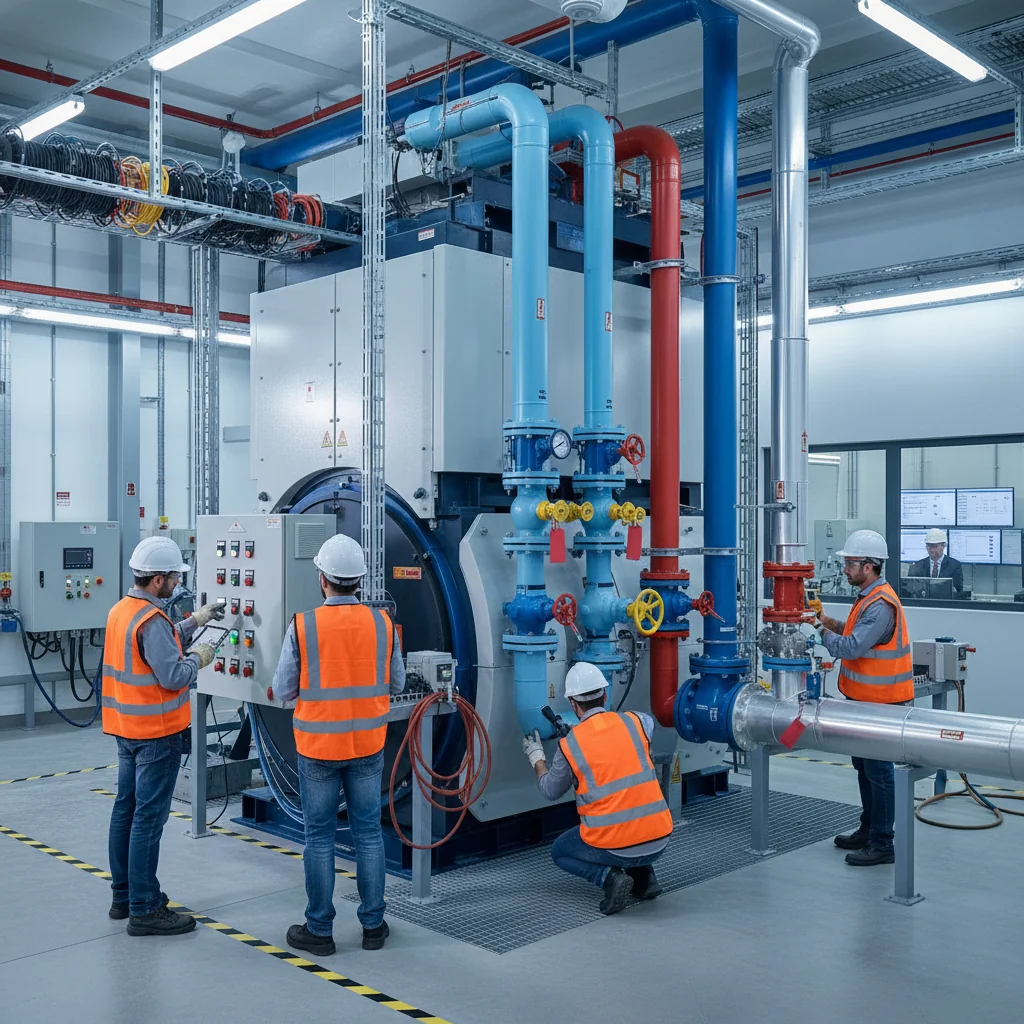
Boilleo defines commissioning as a sequence of proof: proof that every component is installed correctly, every protection system functions, and every operating parameter is under control before fuel ever enters the burner. That includes civil readiness, mechanical and power cycle piping integrity, electrical and control logic, and integration with plant utilities and safety systems.
In practical terms, commissioning covers:
- Pre-commissioning checks (documentation, visual QA/QC, cleanliness, alignment)
- Hydrostatic tests and pressure integrity trials on boilers and piping
- Cold commissioning of auxiliaries—fans, pumps, dampers, valves, instrumentation
- Interlock and protection testing via DCS/PLC
- Initial firing, heat-up, and controlled ramp-up to load with detailed logging
Boiler commissioning is not one test; it is a chain of verifications where the weakest untested link will eventually fail in live operation.
Boilleo’s edge is in refusing to treat any link as trivial—especially in India’s complex mix of industrial construction standards, legacy infrastructure, and aggressive schedules.
Why industrial steam generation still sits at the heart of modern industry
Industrial steam generation is the backbone utility for power, process heat, and critical services across sectors. It converts fuel energy into high-grade thermal and mechanical energy that can drive turbines, heat reactors, sterilize equipment, or maintain climate-critical environments.
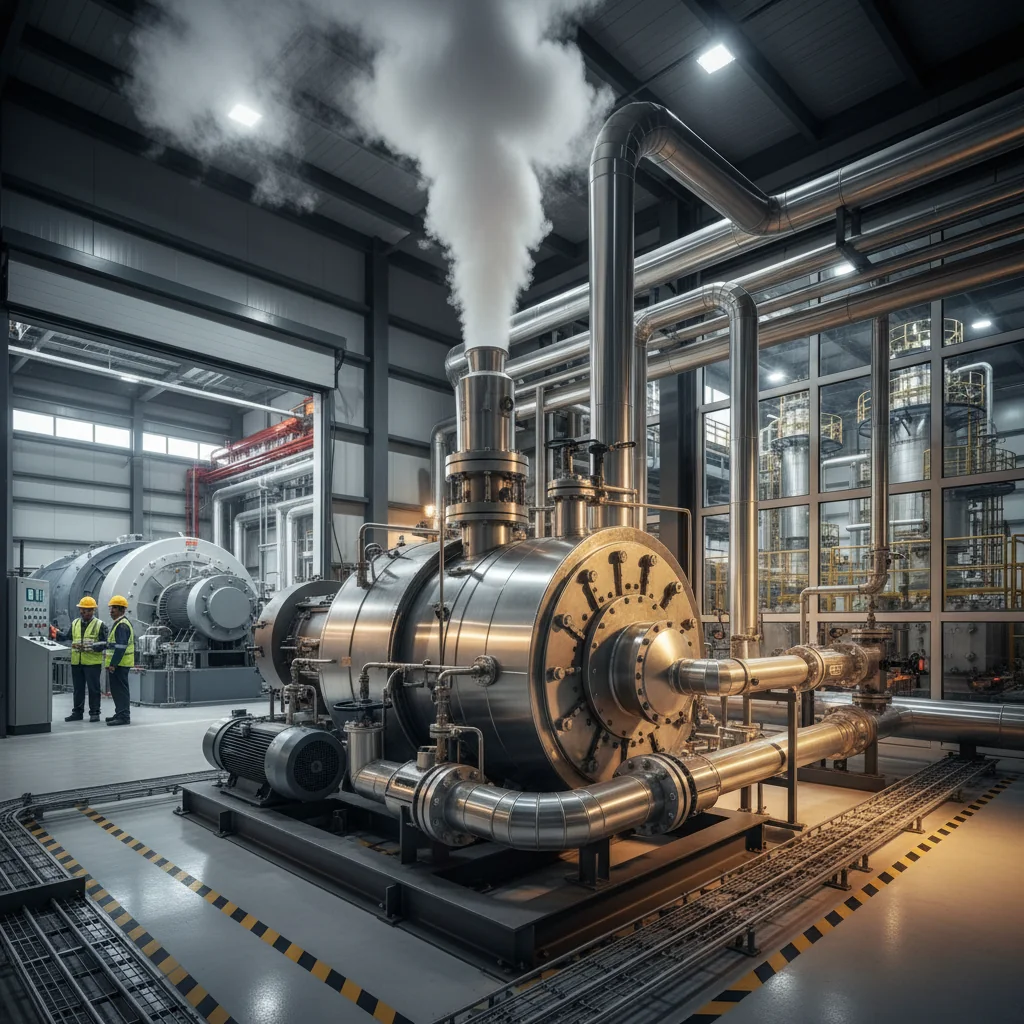
In India, industrial steam generation contributes directly to:
- Power plants: Utility boilers feeding steam turbines for grid power and captive generation.
- Chemicals and petrochemicals: Process steam for distillation, stripping, and chemical reactions.
- Food and pharma: Clean steam for sterilization, cooking, drying, and controlled humidity.
- Metals, textiles, and cement: Large thermal loads for kilns, dryers, and finishing lines.
Boilleo engages steam not as an abstract utility, but as a profit driver. Unstable pressure, poor steam quality, or unplanned boiler outages ripple directly into lost production, missed export deadlines, and higher specific energy consumption. A one-hour forced outage in a 100 MW power plant can translate into tens of lakhs in lost revenue; chronic inefficiency can erode margins by 2–5% annually.
This is why commissioning strategy cannot be generic. Boilleo adapts test envelopes and acceptance criteria to the sector-specific role of the boiler—baseload power, peaking duty, batch process, or cogeneration—so that steam performance aligns with real operating risk.
How industrial steam generation contributes to various industries is simple: it supplies the invisible heat and motion behind almost every product and kilowatt we rely on.
Before tools come out: drawings, data, and design intent verification
The first phase in Boilleo’s 25+ point boiler commissioning checklist happens at the desk, not the drum. The objective is to confirm that what is built truly matches what was designed—and that all information required for safe operation exists and is traceable.

Boilleo’s pre-commissioning documentation checks typically include:
- Design basis review: Fuel envelopes, steam pressure/temperature, load profiles, and applicable codes/IBR requirements.
- Drawing cross-checks: P&IDs vs isometrics vs GA drawings for boiler, power cycle piping, and auxiliaries.
- Material traceability: Mill test certificates, welding procedure qualifications (WPS/PQR), and welder qualifications.
- Vendor documents: O&M manuals, test certificates for safety valves, instruments, and electrical equipment.
- Site-specific constraints: Water quality data, fuel test reports, grid and process tie-in conditions.
For large EPC-style industrial boiler installations, Boilleo often uncovers mismatches at this stage—such as protection setpoints that don’t align with downstream equipment limits, or missing drain/vent valves that will complicate future maintenance.
This desk-level due diligence is where owners can exert powerful influence. Boilleo encourages clients to treat documentation completeness and design intent confirmation as formal hold points before any wet or hot testing is allowed.
If you cannot prove on paper that a boiler is safe and fit for purpose, you have no business proving it with fuel.
Mechanical integrity: the non‑negotiables before pressurizing
Once design intent is confirmed, Boilleo moves into physical verification of the boiler pressure parts, industrial process piping, and power cycle piping. The priority is simple: nothing gets pressurized until it is visually, dimensionally, and structurally verified.

Key mechanical checks in Boilleo’s commissioning approach include:
- Weld and joint inspection: Visual and NDE (as per code) for drum, headers, furnace walls, and high-energy piping.
- Support and hanger setting: Cold settings recorded, hot settings calculated, interferences removed.
- Drain, vent, and slope checks: Ensuring effective drainage to avoid water hammer and corrosion pockets.
- Valve orientation and accessibility: Isolation, control, and safety valves installed to drawings and maintainable from safe access points.
- Boiler internals: Drum internals, separators, and steam dryers correctly installed and cleaned.
Following this, Boilleo supervises or executes hydrostatic tests on boilers and piping—typically at 1.5 times design pressure as per Indian Boiler Regulations (IBR) or project specs. Test acceptance covers not just absence of leaks but also system behavior, support reactions, and gauge consistency.
Industrial construction companies in India are under constant schedule pressure, and hydro tests are often compressed into tick-box exercises. Boilleo’s stance is explicit: any leak, distortion, or unexplained pressure drop is treated as a root-cause investigation trigger, not a minor punch point.
Hydrostatic testing is your last cheap opportunity to discover pressure problems. The next one will happen with fire inside the furnace.
Controls, interlocks, and safety systems: proving the invisible
The most sophisticated boiler can be ruined by primitive control logic. Boilleo treats instrumentation and controls commissioning as seriously as pressure-part integrity, because most catastrophic boiler incidents originate in failed interlocks, not ruptured steel.
Core steps in this phase include:
- Loop checks: Verifying every field instrument—pressure, temperature, level, flow, oxygen—is correctly installed, calibrated, and wired to the DCS/PLC.
- Cause & effect testing: Systematically forcing every alarm, trip, and interlock condition defined in the cause-and-effect matrix.
- Fuel safety logic verification: Purge sequences, flame failure trips, low-air and high-fuel cutouts, furnace pressure protections.
- Integration tests: Tie-ins with balance-of-plant systems like feedwater treatment, condensate recovery, and power export controls.
Boilleo often adds owner-specific operating philosophy to this layer—such as conservative ramp rates for new units, custom load-shedding logic, or additional permissives for high-risk fuels (e.g., high-ash coal, petcoke, biomass blends).
This is also where Boilleo’s broader expertise—illumination systems, signaling integration for plant roads and rail interfaces, and telecommunication plants—adds value. Clear annunciation, redundancy in communication, and safe access routes during emergency trips are designed into the commissioning strategy.
Controls and interlocks are the guardrails that keep operators from driving the boiler off a cliff at 120 km/h.
First fire to full load: Boilleo’s operational performance checklist
Only after mechanical and control integrity is proven does Boilleo authorize first fire. From that moment, the focus shifts from “does it work?” to “does it work within design limits, safely, and efficiently?”
Boilleo’s operational commissioning checks typically cover:
- Heat-up and expansion monitoring: Drum metal temperatures, differential expansion, casing and support behavior.
- Steam purity and quality: Conductivity, silica, and carryover checks to protect turbines and process equipment.
- Combustion optimization: O₂, CO, and unburnt levels tuned for stable flame and minimum excess air.
- Load ramp tests: Step changes in load to verify response, stability, and control logic across the operating range.
- Safety valve popping and reset: Setpoint verification under real steam conditions.
Boilleo differentiates itself by explicitly linking these tests to future maintenance risk. For example, unstable drum levels during ramp-up are flagged not only as a tuning issue but as a predictor of level transmitter scaling problems or inadequate operator training.
This is also where Boilleo’s boiler maintenance services mindset comes through. Trending data from the first 72–168 hours of operation is captured as the baseline for long-term condition monitoring, forming the foundation of predictive maintenance strategies.
The cleanest hour you’ll ever see from a boiler is during commissioning. Capture it, document it, and use it as your benchmark for every maintenance decision.
From commissioning to lifecycle strategy: maintenance, documentation, and owner leverage
What separates world-class boiler projects from the rest is what happens after performance tests are signed off. Boilleo views commissioning as the first chapter of a decades-long maintenance narrative, not the epilogue of construction.
At project closeout, Boilleo emphasizes three owner-critical outcomes:
- Comprehensive as-built and commissioning dossiers: Final P&IDs, isometrics, test certificates, calibration records, and trip logs compiled in a searchable structure.
- Structured SOPs and emergency procedures: Operating manuals adapted to the real plant, not just vendor templates.
- Maintenance and inspection plan: Risk-based intervals for inspections, overhauls, and NDE—linked to actual commissioning observations.
This is where foundational informational queries—why boiler maintenance is important, how to avoid emergency breakdowns, how often to inspect power cycle piping—become operational reality. Plants that treat commissioning reports as living documents typically see lower forced outage rates and smoother regulatory interactions.
For owners seeking industrial construction companies in India that can support complex boiler, piping, and power plant construction projects, Boilleo’s integrated approach—spanning mechanical solutions, civil manpower, industrial piping solutions, and long-term service—creates a single accountable line between first drawing, first fire, and first major overhaul.
Commissioning gives owners their greatest leverage: the right to insist that every future shutdown, repair, and upgrade be measured against a documented, proven standard.
Frequently Asked Questions
What does “boiler commissioning” entail for a new industrial plant?
Boiler commissioning for a new industrial plant entails verifying that the boiler and its auxiliary systems are safe, compliant, and able to deliver steam at the specified capacity and quality. It includes documentation reviews, mechanical inspections, hydrostatic testing, control and interlock trials, and phased operational tests from first fire to full load. A structured commissioning program like Boilleo’s also captures baseline performance data, configures protection systems, and hands over clear operating and maintenance procedures so the owner starts commercial operation with evidence, not assumptions.
How does industrial steam generation contribute to various industries in India?
Industrial steam generation supplies the essential heat and mechanical energy that underpins power generation and most process industries. In India, utility and captive power plants use high-pressure steam to drive turbines; refineries and chemical plants rely on steam for distillation and reaction control; food and pharmaceutical facilities require clean steam for sterilization; and sectors like textiles, paper, and metals use steam for drying, finishing, and temperature control. Reliable steam reduces specific energy consumption, stabilizes product quality, and enables plants to meet environmental and safety regulations consistently.
Why is boiler maintenance so important after commissioning?
Boiler maintenance is critical because high-pressure steam systems operate under extreme thermal and mechanical stress. Without a maintenance plan anchored in commissioning data, minor issues—like tube fouling, improper water chemistry, or leaking valves—can evolve into tube failures, turbine damage, or major outages. Regular inspections, cleaning, calibration, and condition monitoring extend equipment life, protect operators, and keep energy costs under control. Boilleo uses commissioning baselines to set realistic inspection intervals, identify high-risk components, and prioritize proactive interventions over emergency repairs.
How can plant owners evaluate an industrial boiler installation contractor?
Owners should look beyond the lowest bid and assess how rigorously a contractor approaches commissioning and QA/QC. Key indicators include: documented commissioning checklists and cause-and-effect matrices; experience with similar fuels, pressures, and industries; in-house capability for industrial process piping and power cycle piping; clarity on deliverables like as-built drawings and O&M manuals; and a formal handover of operating and emergency procedures. Contractors like Boilleo, who integrate construction, commissioning, and boiler maintenance services, reduce interface risk and provide a single point of accountability from erection through long-term operation.
What should be in a 25-point boiler commissioning checklist?
A robust 25-point boiler commissioning checklist should cover documentation review, mechanical integrity, piping and supports, cleaning and flushing, hydrostatic testing, instrument calibration, loop checks, interlock and trip testing, fuel system safety, burner management system logic, first fire conditions, controlled heat-up, steam purity checks, combustion tuning, safety valve setting verification, load ramp tests, auxiliary equipment performance, emergency shutdown simulations, noise and vibration limits, and final punch list closure. Boilleo customizes this framework to plant-specific risks, codes, and owner performance targets.
When should I involve Boilleo Private Limited in a boiler project?
The most effective time to involve Boilleo is during the design and planning stages of an industrial boiler installation or power plant construction project. Early engagement allows Boilleo to influence P&IDs, layout, access, and piping configurations for maintainability and safety. However, Boilleo can also add significant value at pre-commissioning, re-commissioning after major overhauls, and when recurring boiler problems or emergency breakdowns suggest deeper systemic issues. The earlier Boilleo participates, the more risk can be designed out instead of repaired later.
Conclusion: Turning first fire into a long-term advantage
Boiler commissioning is often treated as the final sprint in a construction marathon. Boilleo Private Limited sees it differently: as the opening move in a decades-long game of reliability, safety, and energy efficiency. By systematizing a 25+ point approach—rooted in India’s real industrial conditions, IBR requirements, and cross-sector experience—Boilleo helps owners shift from hope-based to evidence-based steam generation.
For project developers, utilities, and process industries seeking industrial construction companies in India that can own the journey from erection to operation, the next step is straightforward. Audit your current commissioning philosophy against the principles in this article. Where you see gaps—in documentation, testing rigor, interlock logic, or maintenance planning—is exactly where Boilleo can convert risk into resilience, and first fire into a long-term competitive advantage.
industrial boiler installationboiler maintenance servicesBoilleo Private Limitedpower plant construction