It seems we can’t find what you’re looking for. Perhaps searching can help.
Industrial Piping Solutions: How to Compare Contractors on Leak Rates, QA and Welding Quality
industrial piping solutionsindustrial piping contractors reviewsindustrial piping leaks repairpower cycle piping services
The most expensive leak in an industrial plant is rarely the first one you see. It’s the one that shuts down a unit at peak load, triggers a safety incident, or forces a rushed shutdown of a power block. That risk is decided long before commissioning—when you choose your industrial piping contractor.
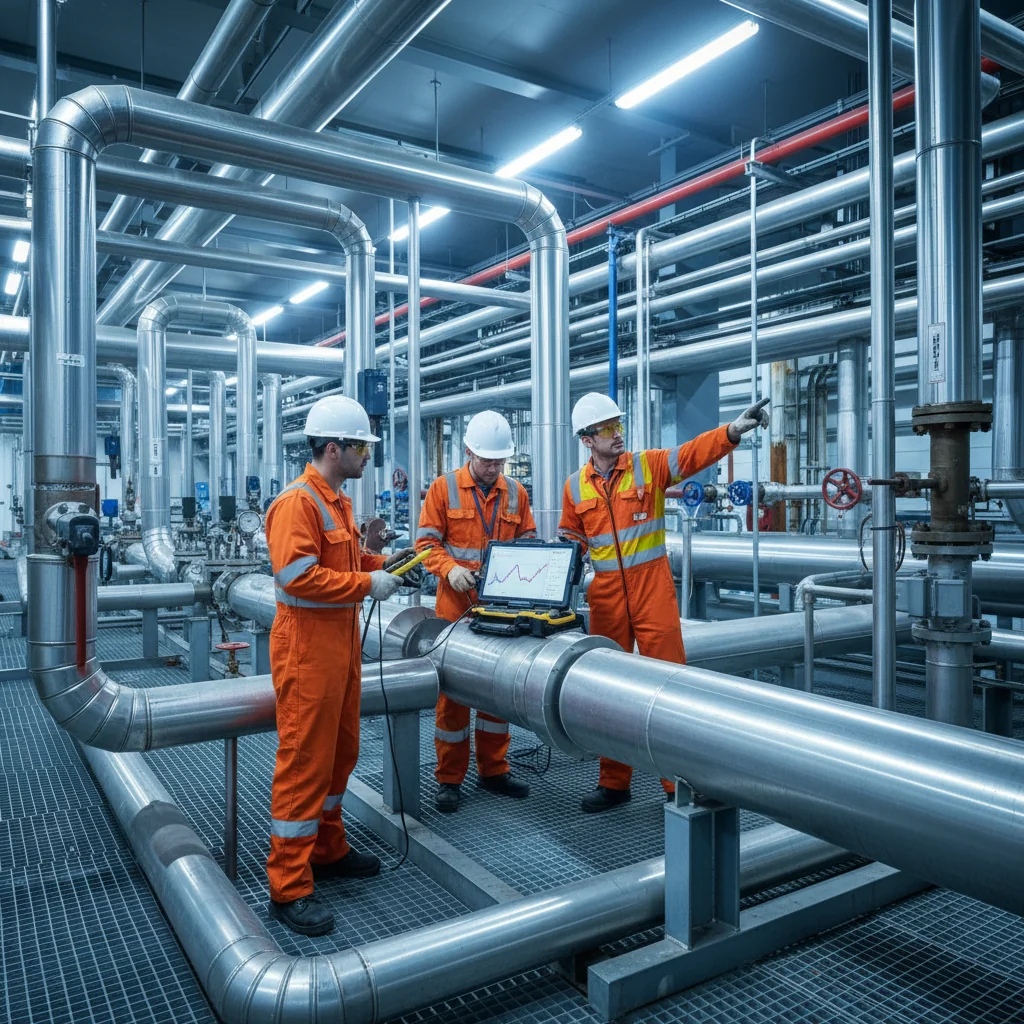
This article explains exactly how to choose an industrial piping contractor using five hard metrics: weld repair rate, hydrotest success rate, documented leak rate, QA discipline, and schedule adherence with safety. It is written from the perspective of Boilleo Private Limited, an Indian construction specialist in industrial process piping, power cycle piping, and plant erection who has seen these metrics play out across roads, railways, airports, power plants and process industries.
If you currently select piping partners mainly on price and past logo lists, you are flying blind. The real differentiator in industrial piping solutions is statistical reliability: how consistently a contractor delivers leak-free, code-compliant systems under schedule pressure.
For high-pressure power cycle piping, a 1–2% weld repair rate and 98%+ first-pass hydrotest success are not luxuries—they are the dividing line between predictable operations and recurring outages.
Why Contractor Choice Determines 20 Years of Leak Risk
The contractor you choose for industrial piping work largely fixes your leak risk, inspection burden, and outage profile for 15–30 years. Piping is not a commodity; it is a reliability asset constructed joint by joint.
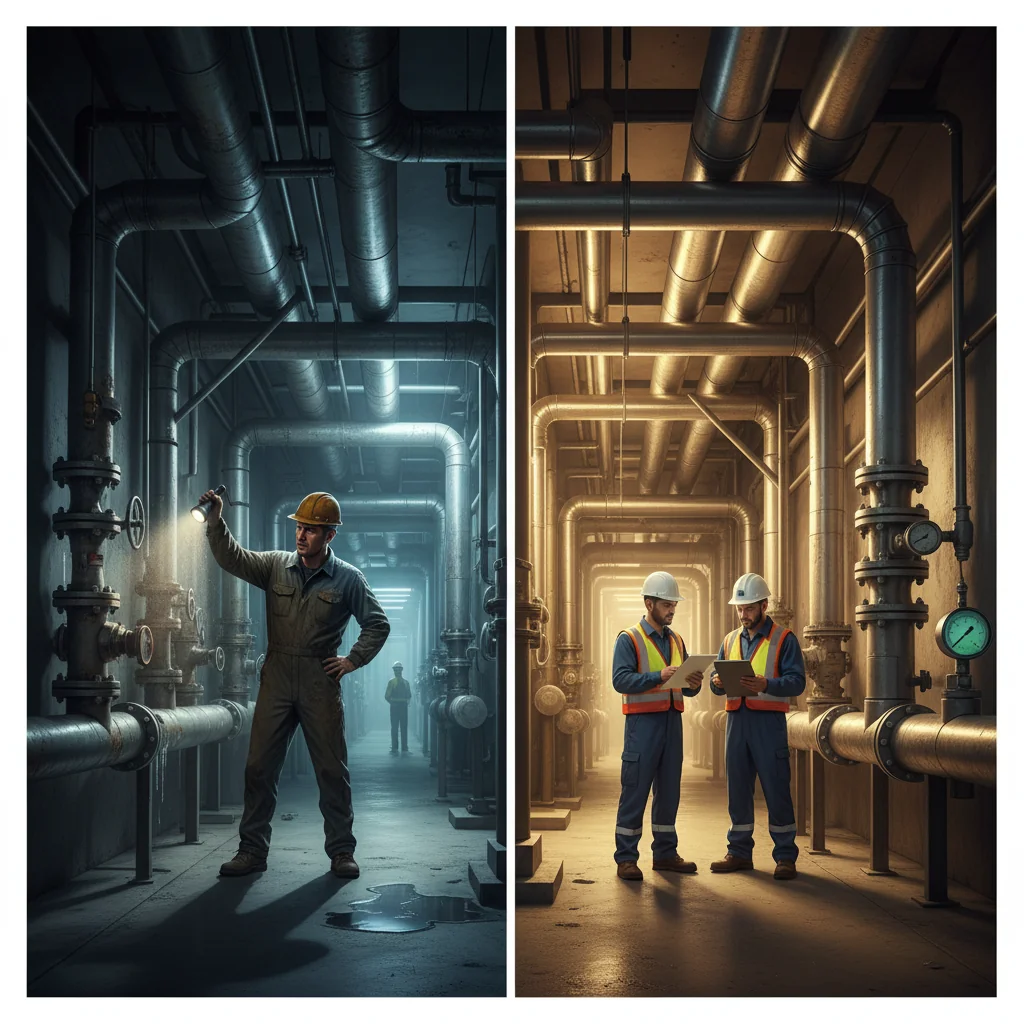
Industrial piping solutions are the integrated set of design, fabrication, erection, testing and documentation activities that produce a safe, pressure-retaining system. In power and process plants, this includes power cycle piping services, steam and condensate lines, fuel lines, cooling water, and auxiliary systems.
Across Indian power and process projects, owners most often underestimate three things:
- How strongly weld quality correlates with forced outages in the first 5 years
- How much schedule pressure degrades QA when processes are weak
- How costly rework becomes once insulation and structures are installed
Studies from global utilities show that 60–80% of early-life piping failures trace back to fabrication or erection defects—porosity, lack of fusion, misalignment, improper PWHT. These are contractor-controlled variables.
Boilleo’s experience in power plants, boiler installations and high-energy steam generation is blunt: plants that squeezed 5–10% off EPC cost with low-bid piping contractors often spent 2–3x that saving in unplanned outages and leak repairs within the first decade.
Key takeaway: Selecting an industrial piping contractor is not a procurement decision; it is a long-term asset reliability decision with compounding effects on maintenance budgets and plant availability.
How to Choose an Industrial Piping Contractor: The 5-Metric Shortlist
You should choose an industrial piping contractor by quantifying five metrics on comparable reference projects, not by brochures or generic “experience” claims.
These five metrics are:
- Weld repair rate (by process, diameter and material class)
- Hydrotest first-pass success rate
- Documented in-service leak rate in the first 24 months
- QA/QC system maturity (procedures, traceability, inspection coverage)
- Schedule adherence with safety (no lost-time incidents or quality shortcuts)
For each shortlisted contractor, insist on verifiable data:
- ASME/IS code stamps, WPS/PQR libraries, and welder performance records
- Hydrotest logs with punch list statistics
- Owner-signed performance letters mentioning leaks, NCRs, or rework
- Safety statistics (TRIR/LTIFR) and schedule variance reports
Industrial piping contractors reviews on paper are often narrative. Convert them to numbers. Ask: “On our last 3 projects with similar pressure and temperature, what were your weld repair rates and hydrotest success?” A contractor that cannot answer this in numbers is not managing quality, only reacting to it.
Boilleo has standardized these metrics across its industrial piping solutions portfolio in India, giving owners transparent performance baselines before contract award.
The best way to compare industrial piping contractors is to demand quantified performance on weld repair, hydrotest success, leak history, QA discipline, and schedule-safety balance—then score bids accordingly.
Metric 1: Weld Repair Rate – Your Early-Warning Signal
Weld repair rate is the percentage of welds that fail inspection and require rework. It is the clearest early indicator of future industrial piping leaks repair needs.
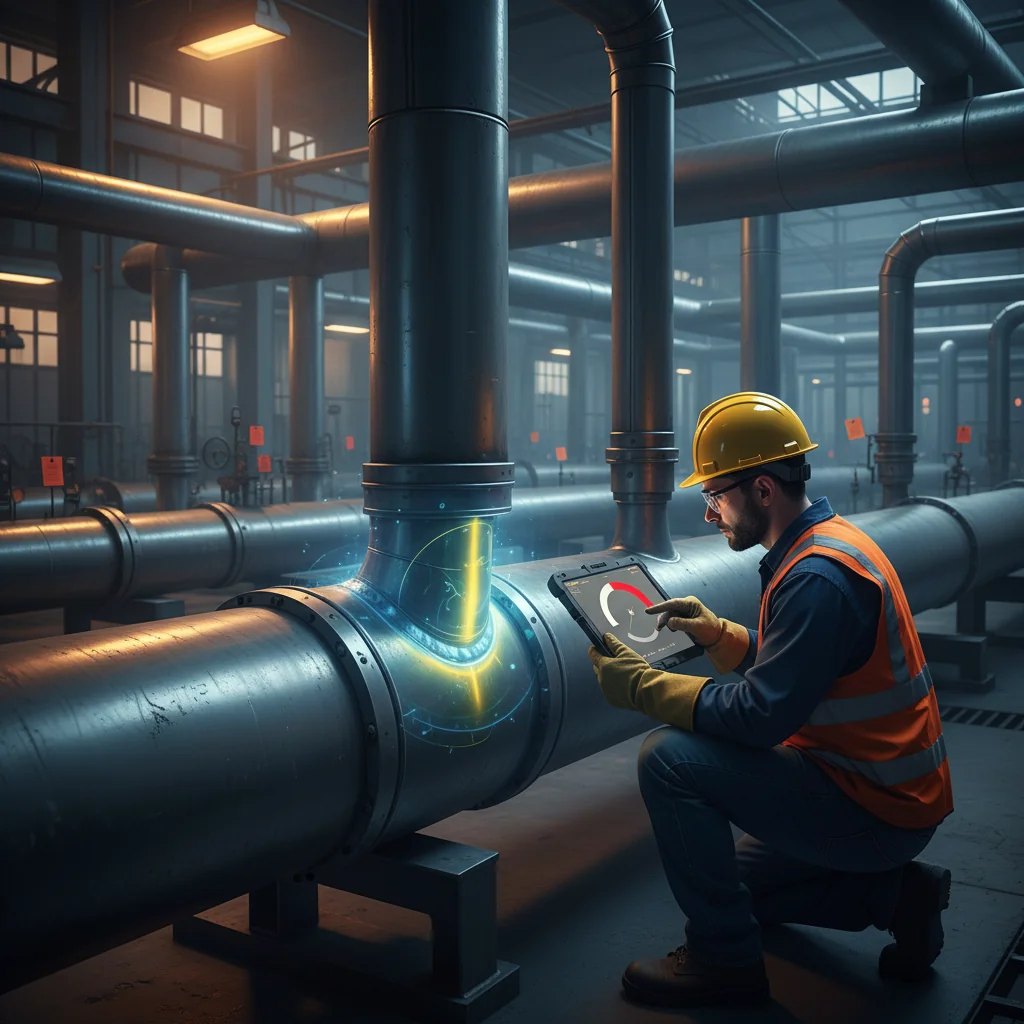
Formally, weld repair rate is defined as: (number of rejected welds / total welds inspected) × 100, often broken down by NDT method (RT, UT, PT, MT), process (SMAW, GTAW, SAW), material and thickness.
Benchmarks for high-quality contractors on critical services:
- High-energy power cycle piping: 1–2% repair rate is excellent; 3–5% is acceptable with good root-cause control.
- Carbon steel utility lines: 2–4% is generally acceptable.
- Repair rates above 6–7% signal systemic issues in fit-up, WPS suitability, welder skill or supervision.
Why it matters:
- Each repair is a local metallurgical disturbance and schedule hit.
- High rates correlate with hidden defects that escape NDT.
- Chronic repairs indicate poor procedure qualification or rushed production.
When comparing industrial piping solutions, ask every bidder to provide:
- Three recent project summaries with weld counts and repair percentages
- Breakdown by line class (steam, feedwater, fuel, cooling water)
- Evidence of corrective actions when repair rates spiked
Boilleo’s internal standard for power cycle piping is to hold overall repair rates below 2–3% on high-energy systems, supported by rigorous welder qualification and continuous NDT feedback.
A contractor’s weld repair rate is not just a quality statistic; it is a proxy for how much rework, delay and hidden risk you are quietly accepting into your plant.
Metric 2: Hydrotest Success & Leak Rates – Proof That Systems Hold
Hydrotest first-pass success rate and early leak rates are the most direct, system-level proof of piping integrity.
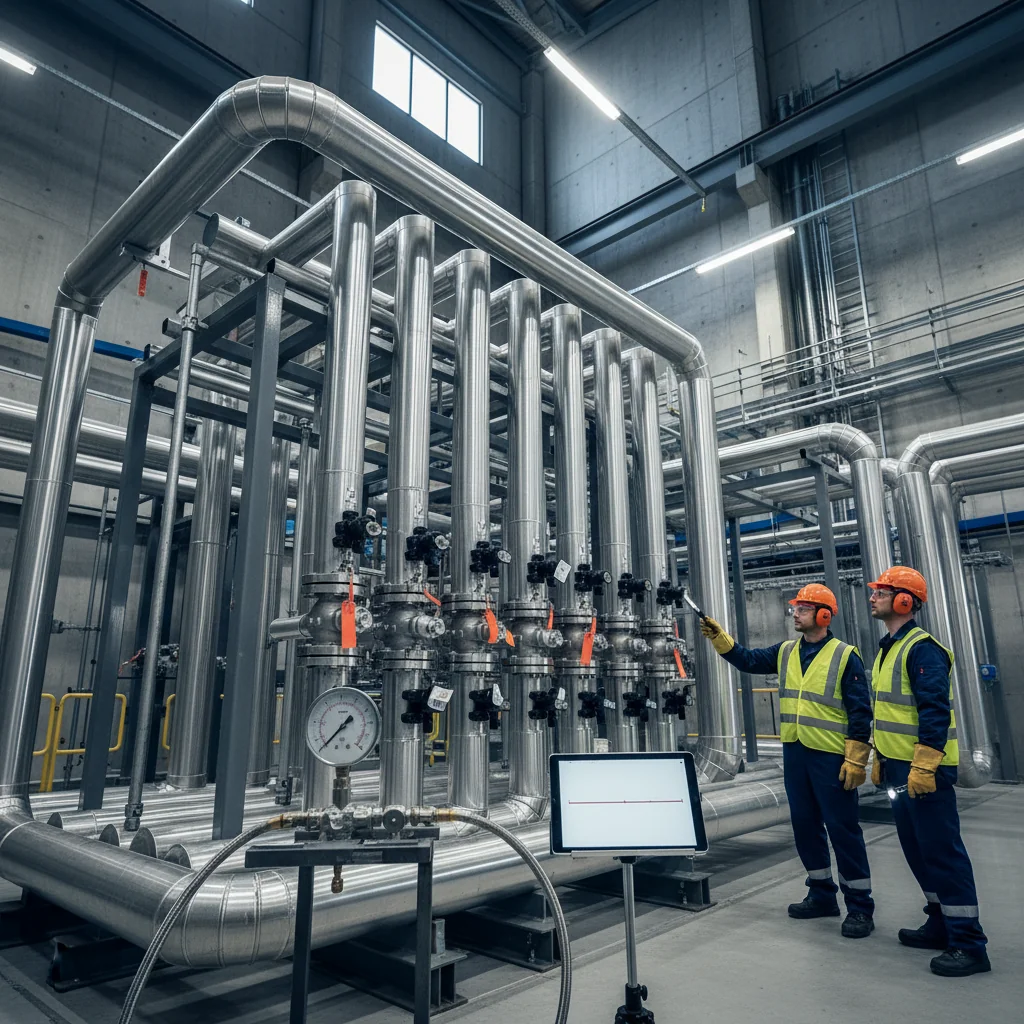
Hydrotest first-pass success rate is the percentage of test packages that achieve target pressure and hold time without leaks or critical defects on the first attempt. For disciplined contractors, 95–98%+ is realistic even on complex power blocks.
Ask bidders to present for comparable projects:
- Number of hydrotest packages and first-pass success percentages
- Average punch items per package, categorized by severity
- Time to close punch lists and re-test, where needed
Then, connect this to documented in-service leak rate in the first 12–24 months:
- Number of leaks per 1,000 welds installed
- Location and cause (weld, flange, fitting, valve, support-induced)
- Unplanned outages or forced derates triggered by leaks
For power cycle piping services, a mature contractor aims for zero pressure-part leaks in the first operating year and maintains a leak rate well under 0.5 per 1,000 welds across five years.
Boilleo tracks hydrotest and early leak performance as core KPIs, integrating lessons learned across boiler, turbine, and balance-of-plant piping systems.
If a contractor cannot show you hydrotest logs and early-life leak statistics, you are effectively betting your plant availability on undocumented promises.
Metric 3: QA Discipline, Welding Quality & Best Practices to Reduce Leaks
The best practices to reduce industrial piping leaks are not mysterious; the difference is how rigorously they are enforced under schedule pressure.
At minimum, a contractor’s QA/QC system should demonstrate:
- Code-compliant WPS/PQRs for each material, thickness and position
- Comprehensive welder qualification records with continuity tracking
- Indexed weld maps linking isometrics, welders, NDT and repairs
- Formal ITPs (Inspection and Test Plans) with hold/witness points
- Documented consumable control, preheat, interpass and PWHT procedures
From an owner’s standpoint, insist on seeing real artifacts, not just policy statements: sample weld traceability dossiers, NDT reports, and non-conformance reports (NCRs) with closure evidence.
Concrete best practices Boilleo applies across industrial piping solutions in India include:
- Early constructability reviews with designers to avoid un-weldable joints
- Mock-ups and WPS validation on difficult alloy or position combinations
- Daily welders’ toolbox talks focused on recurring defect modes
- Real-time NDT feedback to welders, not just end-of-lot reporting
- Strict flange management: controlled bolt torque, gasket handling, joint tagging
These practices cut defect rates by double-digit percentages and are crucial where boiler and steam cycle pressures exceed 130–160 bar.
Welding quality is not a matter of individual craftsmanship alone; it is the visible output of an invisible QA system—procedures, training, traceability and enforcement.
Industrial Piping Solutions Comparison: Cost vs Reliability vs Schedule
An effective industrial piping solutions comparison balances three outcomes: total installed cost, long-term reliability, and schedule certainty. The lowest bid rarely wins on all three.
When you evaluate contractors, classify them along two axes:
- Quality maturity: tracked metrics, documented QA, low repair/leak history
- Execution capacity: proven manpower, equipment, and management depth for your project size
A practical comparison framework:
- Technical score (60–70%) based on the five metrics, method statements, and past project complexity
- Commercial score (30–40%) based on price, terms, and value-add services (e.g., constructability support, digital documentation)
Illustrative trade-off:
- Contractor A: 12% cheaper, 6–8% weld repair, unclear leak history, weak QA docs
- Contractor B: baseline price, 2–3% weld repair, 98% hydrotest success, documented near-zero leaks
Over a 20-year plant life, even one major forced outage can erase the initial saving from Contractor A. This logic is especially sharp for power cycle piping services, where leaks threaten both safety and generation revenue.
Boilleo encourages owners to convert qualitative impressions into a scored matrix, making the reliability–cost trade-off explicit and board-defensible.
The most rational way to select a piping contractor is to price not just the installation, but the expected cost of future leaks, repairs and lost production inherent in their track record.
Where Boilleo Excels: Power, Process and India-Scale Complexity
Boilleo Private Limited competes and wins not by promising perfection, but by instrumenting the five metrics that actually drive leak-free performance on Indian projects.
Across industrial process piping, power cycle piping, and critical infrastructure (roads, railways, airports, harbors), Boilleo brings three concrete strengths:
- Code-anchored welding quality: Robust WPS/PQR libraries, systematic welder qualification and low repair rates on high-pressure boiler and turbine lines.
- Hydrotest discipline: Structured test-pack preparation, punch management and leak-prevention practices that routinely achieve >95% first-pass hydrotest success.
- Integrated execution: Mechanical, electrical, and civil manpower under one roof, reducing interface risk between piping, supports, equipment and control systems.
Because Boilleo also works on electric power and transformer plants, telecommunication and radar installations, and illumination/signalling systems, it designs piping and erection with system interactions in mind: access for maintenance, routing around critical cables, and compatibility with boiler maintenance regimes.
For owners seeking industrial construction companies in India that understand both piping and power plant maintenance, Boilleo’s value is simple: leak-free, schedule-tight execution backed by numbers, not anecdotes.
If your mandate is to keep steam where it belongs, protect people, and hit COD without drama, you need a contractor who treats weld repair, hydrotest and leak rates as board-level metrics. That is Boilleo’s operating system.
Frequently Asked Questions
How do I choose an industrial piping contractor for a power plant project?
Start by defining objective evaluation criteria before you look at prices. Focus on five metrics: weld repair rate, hydrotest first-pass success, documented early-life leak rates, QA/QC system maturity, and schedule adherence with safety. Ask contractors for data from at least three comparable projects, including weld counts, NDT reports, and owner references. Score technical quality at 60–70% of your total evaluation and commercial terms at 30–40%. Finally, visit an active site or review a completed plant to see how they manage cleanliness, documentation, supervision and interfaces with boilers, turbines and balance-of-plant equipment.
What are best practices to reduce industrial piping leaks?
Leak reduction starts with design and continues through installation and operation. Key practices include: robust WPS/PQR qualification and welder training; strict control of preheat, interpass temperature and PWHT; early constructability reviews to avoid impossible joints; disciplined flange management (gasket handling, bolt torque, joint tagging); and comprehensive NDT and hydrotesting with rapid feedback to welders. Keeping detailed weld mapping and QA documentation allows you to trace issues and improve continuously. Contractors like Boilleo embed these practices into standard procedures for high-pressure steam and power cycle systems in India.
How can I compare industrial piping solutions across different contractors?
Create a structured comparison matrix. List each contractor and score them on: 1) weld repair rate benchmarks; 2) hydrotest success and punch list performance; 3) QA/QC documentation and traceability; 4) safety and schedule history; and 5) ability to handle your specific services (e.g., power cycle piping, boiler connections, critical utilities). Add commercial price and terms as a separate dimension. Use a 1–10 scale and weight each criterion based on its importance to your project. This turns vague industrial piping contractors reviews into data-driven selection, making trade-offs visible and defensible.
What weld repair rate is acceptable for industrial piping projects?
Acceptable weld repair rates depend on service criticality and materials, but strong contractors typically achieve 1–2% on high-energy power cycle piping and 2–4% on general carbon steel utility lines. Rates above 6–7% indicate systemic problems in fit-up, welding procedures, skills, or supervision, and they often correlate with future leaks and rework. When you evaluate bids, request project-specific repair statistics by line class and NDT method. If a contractor cannot provide this data, they are likely not controlling quality tightly enough for high-pressure boiler or steam cycle services.
Why are hydrotests and leak statistics vital for long-term reliability?
Hydrotests verify that your piping system can safely withstand pressure before operation, while early-life leak statistics reveal how robust that integrity is under real conditions. A high hydrotest first-pass success rate (typically 95–98%+) shows that fabrication, erection and QA processes are working. Low in-service leak rates in the first 12–24 months confirm that joints, flanges and supports behave as designed during thermal cycles and vibration. Together, these indicators predict maintenance workload, outage risk and safety performance over decades. Ignoring them in contractor selection effectively trades long-term reliability for short-term savings.
Conclusion: Turn Piping From a Hidden Risk into a Measured Advantage
Industrial piping is the circulatory system of every power plant and process facility. Yet its quality is often decided in bid rooms that prioritize headline price over measurable reliability. You can reverse that pattern by anchoring contractor selection on five metrics: weld repair rate, hydrotest success, early leak rates, QA discipline, and schedule-safety performance.
For Indian owners navigating complex power, industrial steam generation, and infrastructure projects, the path is clear: demand numbers, not narratives. Compare industrial piping solutions using a structured matrix and be explicit about the cost of risk you are willing to accept.
Boilleo Private Limited has built its piping and erection practice around precisely these metrics, delivering leak-minimized, schedule-tight installations across power, transport and industrial sectors. If your next mandate demands not just installed pipe, but predictable performance over decades, it is worth a conversation grounded in data—not promises.
The pipes you install this year will write your maintenance story for the next twenty. Choose the contractor who knows their numbers.
industrial piping solutionsindustrial piping contractors reviewsindustrial piping leaks repairpower cycle piping services