It seems we can’t find what you’re looking for. Perhaps searching can help.
Emergency Shutdown of Industrial Steam Boilers: A Step-by-Step Playbook for Control Rooms
boiler breakdown repairurgent boiler repairindustrial boiler services near mepower plant maintenance india
When a steam boiler trips in a 500 MW power plant or a mid-size process plant in Gujarat, control room operators have seconds—not minutes—to act. The difference between a controlled emergency shutdown and a chaotic scramble can be measured in crores of rupees, weeks of downtime, and, most critically, lives. This playbook is written for those seconds.
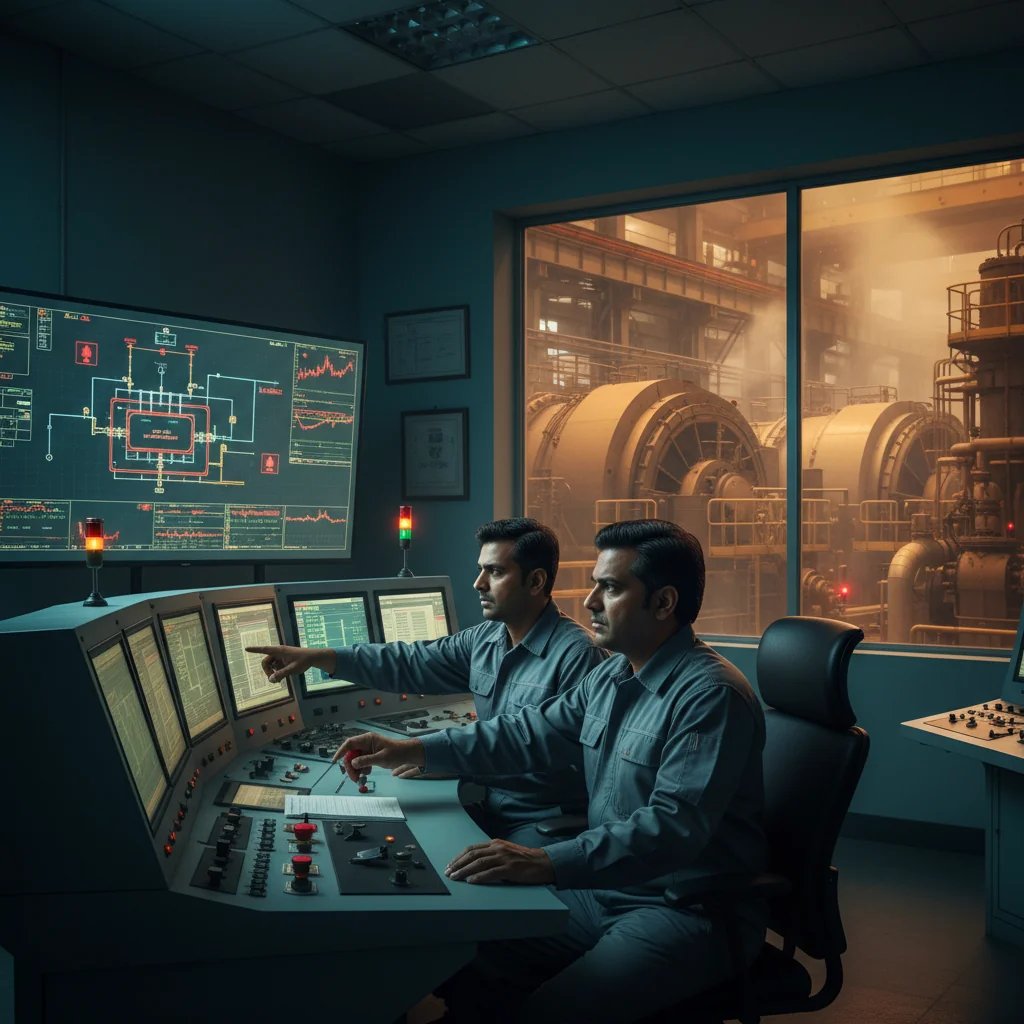
This article explains exactly how to perform an emergency shutdown of an industrial steam boiler, in a 10-step sequence tuned for Indian operating conditions, grid realities, and regulatory expectations. It also clarifies when to push through your in-house response and when to immediately escalate to boiler breakdown repair specialists.
Boilleo Private Limited works across India on boiler erection, power cycle piping, mechanical works, and critical shutdowns. The guidance here reflects patterns we see repeatedly in plants—from coastal IPPs in Tamil Nadu to captive boilers in Maharashtra industrial parks.
In an emergency, clarity is a safety system. A pre-defined, trained 10-step shutdown sequence can reduce damage risk by more than 50% compared to ad hoc responses.
1. Recognising an Emergency: When to Trigger an Immediate Boiler Shutdown
An emergency shutdown should be triggered when continued boiler operation presents an immediate threat to people, equipment, or system integrity. The control room must be able to recognise these conditions in under 10 seconds.
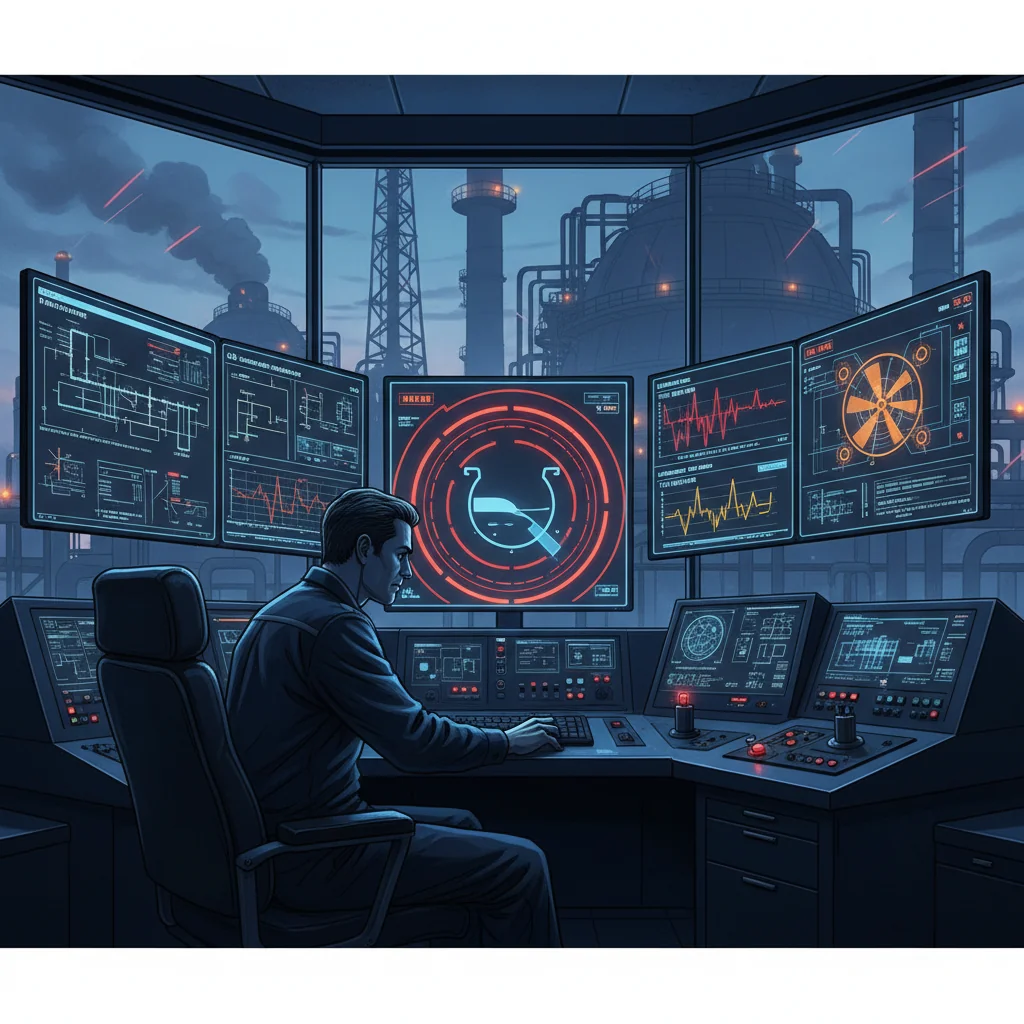
Emergency shutdown conditions typically include:
- Drum level out of safe limits with rapid trend (especially low-low level)
- Furnace pressure very positive (risk of furnace explosion) or very negative (implosion risk)
- Loss of all forced draft (FD) or induced draft (ID) fans
- Sudden loss of fuel control or uncommanded fuel increase
- Suspected tube rupture (noise, spray, sudden steam flow/drop in pressure)
- Major steam, fuel, or high-pressure water leak in boiler house
- Fire in boiler, burner floor, or fuel handling system
- Loss of power to critical protection and control systems
Plants that ask how to perform an emergency shutdown of an industrial steam boiler often underestimate the first step: defining the trigger. Without clear criteria, operators delay, debate, and lose precious moments.
Key takeaway: Pre-define and display emergency shutdown criteria on the control room wall, and align them with OEM documents, statutory rules, and your digital control system (DCS) trip matrix.
2. The 10-Step Emergency Shutdown Sequence: Overview for Control Rooms
The safest emergency shutdown of an industrial steam boiler follows a fixed, rehearsed sequence: secure firing, secure air and draft, stabilise pressure, and protect metal surfaces and downstream systems.
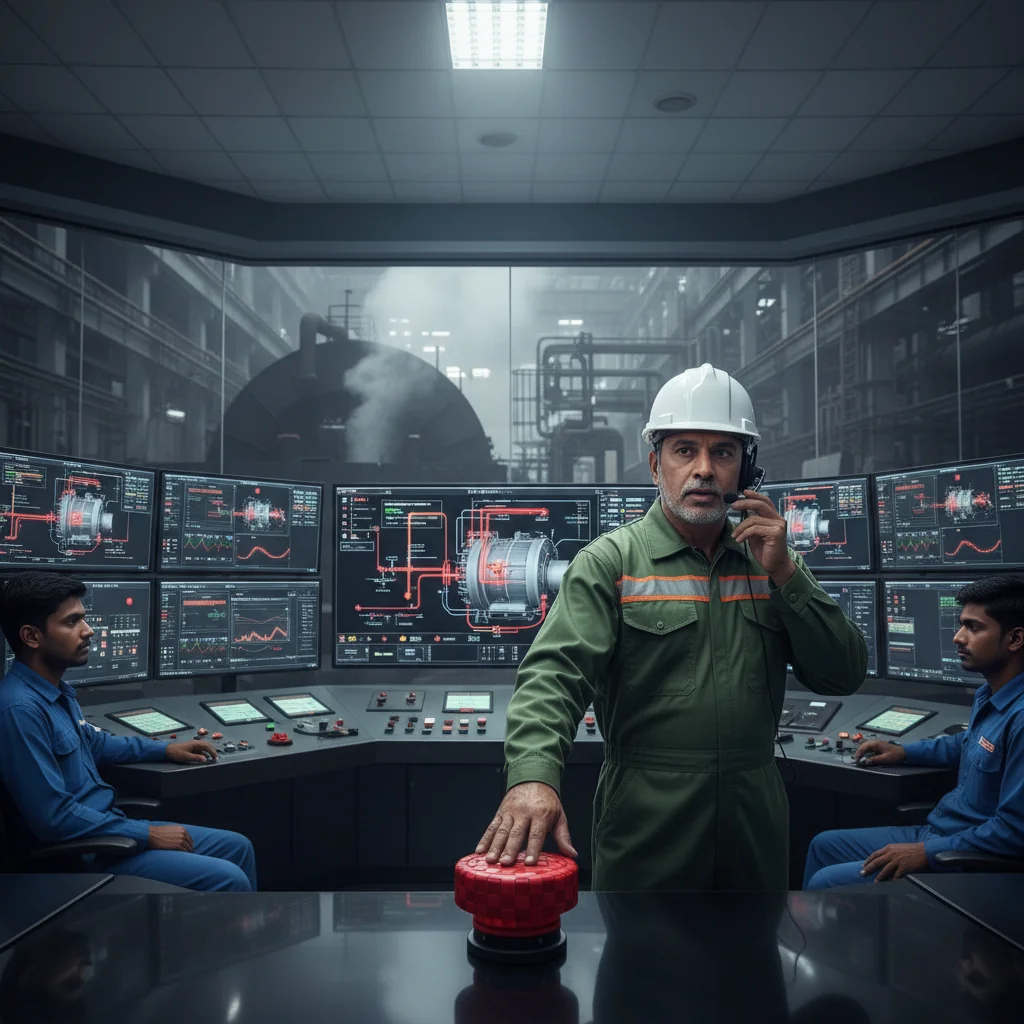
For most water-tube industrial and utility boilers in India, a robust 10-step sequence is:
- Announce emergency and take control of the desk
- Initiate boiler master trip / emergency shutdown pushbutton
- Verify fuel isolation (all fuel valves closed and burners tripped)
- Stabilise air and draft to safe purge conditions
- Maintain safe drum level and feedwater to prevent overheating
- Control steam pressure reduction to protect steam piping and turbine (if applicable)
- Isolate affected sections or systems (e.g., leaking header)
- Secure auxiliaries in controlled order (fans, pumps, mills, conveyors)
- Lockout/tagout (LOTO) and physically verify zero energy state for repair
- Log, debrief, and initiate root cause and repair process
Each plant and boiler OEM will require fine-tuning of setpoints and interlocks, but the sequence logic remains stable across sites.
Memorable rule: First kill the fire, then tame the air, then protect the water and steam path. Never improvise this order unless a specific OEM instruction says otherwise.
3. Steps 1–3: Announce, Trip, and Isolate Fuel Without Hesitation
The first three steps focus on decisiveness and cutting the energy source feeding the hazard. Delay here is the most common human-factors failure Boilleo sees during incident investigations.
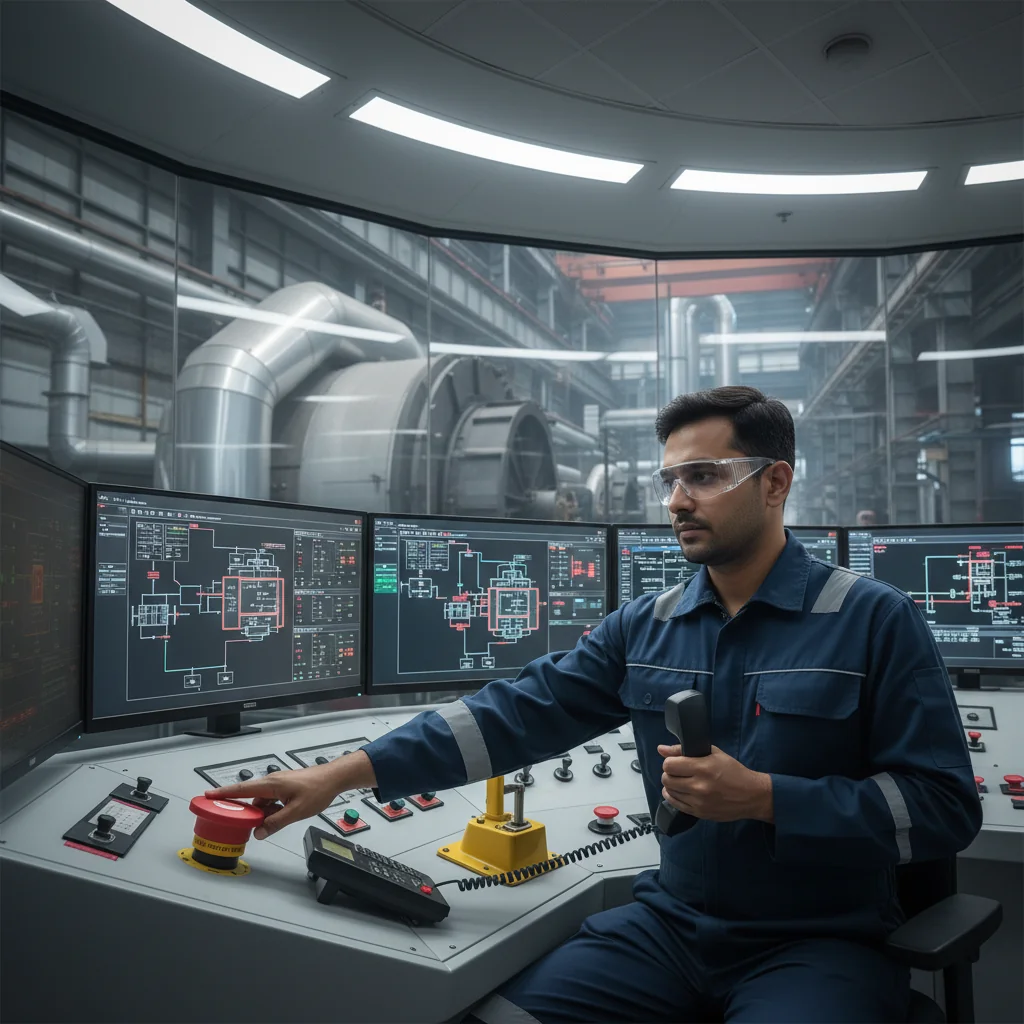
Step 1 – Announce emergency
Immediately state on PA or intercom: “Boiler emergency shutdown in progress – all non-essential communication stand by.” This reduces distraction and empowers the boiler desk operator to act without noise.
Step 2 – Initiate boiler master trip
Press the dedicated Boiler Emergency Shutdown pushbutton or execute the predefined trip sequence in DCS. This should:
- Trip all burners
- Shut main fuel valves (oil/gas/coal feeders)
- Initiate purge logic if power and fans are available >
Step 3 – Verify fuel isolation
Do not trust a single indication. Confirm:
- Fuel pressure reading drops to safe level
- Valve closed feedback is healthy and consistent across redundant sensors
- For solid fuel: feeders, mills, stokers have stopped and bunker isolation is active
For plants prioritising urgent boiler repair readiness, this is also the moment to alert the emergency response team and, where needed, call your industrial boiler services partner so expert support mobilises while you complete the sequence.
4. Steps 4–6: Manage Air, Draft, Water Level, and Pressure Safely
Once the fire is out, the priority shifts to preventing furnace damage, drum exposure, and violent pressure transients in the steam system. These middle steps are where experienced control room engineers create or prevent secondary damage.
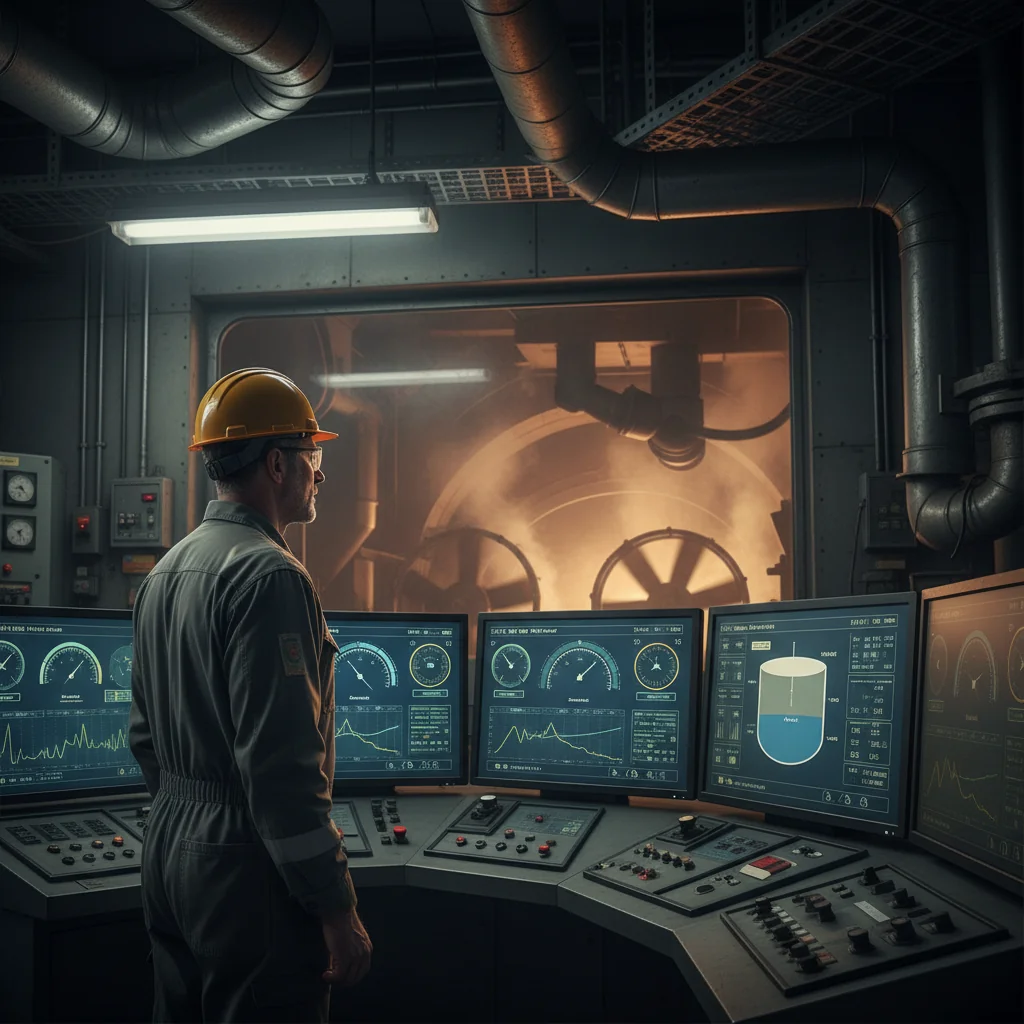
Step 4 – Stabilise air and draft
- Keep FD/ID fans running initially to clear unburnt fuel and maintain near-zero furnace pressure.
- Follow OEM purge logic (e.g., 5–7 volume changes, typically 5–10 minutes depending on furnace size).
- Avoid abrupt fan trips unless an electrical/fire hazard demands it.
Step 5 – Maintain safe drum level and feedwater
- Target mid-level band (e.g., 50–60% of gauge) to avoid swelling/shrinkage extremes.
- Use at least one reliable feedwater source; avoid overfilling which can cause water carryover and turbine damage.
- If a tube leak is suspected, controlled feed may still be required to prevent local overheating until isolation is possible.
Step 6 – Control steam pressure reduction
- Gradually reduce load on steam users (turbine throttling, process valves) where you still have control.
- Use atmospheric/condensing dumps if installed and available.
- Aim for controlled ramp-down rather than uncontrolled rapid depressurisation to protect headers and piping.
Key takeaway: After fuel isolation, the boiler is a hot pressure vessel full of stored energy. Managing air, water, and pressure transforms it from a threat into a cooling, stable system.
5. Steps 7–10: Isolate Damage, Secure Auxiliaries, and Prepare for Repair
The final steps complete the safe shutdown and hand the plant over to maintenance and OEM/contractor teams. This is where disciplined plants prevent a trip from becoming a protracted outage.
Step 7 – Isolate affected sections
- Shut isolation valves to leaking headers, sootblowers, or attemperators as identified.
- Isolate damaged burners or fuel trains even if the boiler is fully tripped.
Step 8 – Secure auxiliaries in order
- After purge, ramp down and stop FD/ID/PA fans as per OEM order.
- Stop mills/coal handling systems systematically to avoid hot spots and choking.
- Stop non-essential pumps; retain critical cooling and seal systems as needed.
Step 9 – Lockout/Tagout (LOTO)
- Isolate electrical feeds to the boiler, fans, mills, and relevant valves.
- Apply physical locks and tags as per your permit-to-work system.
- Verify zero energy state (electrical, mechanical, hydraulic, pneumatic, steam).
Step 10 – Log, debrief, and mobilise repairs
- Capture sequence of alarms, actions, and timings from DCS.
- Conduct a 15-minute hot debrief with operators and shift in-charge.
- Call in boiler breakdown repair specialists or industrial construction companies India like Boilleo if tube replacement, pressure part repair, or major piping work is needed.
6. How to Troubleshoot Common Issues with Industrial Boilers After a Trip
After the boiler is safely shut down, control rooms and maintenance teams must quickly determine whether the event needs minor adjustment or full-scale urgent boiler repair. Understanding how to troubleshoot common issues with industrial boilers prevents repeat trips.
Typical post-trip scenarios and checks:
- Furnace pressure trip: Check FD/ID fan health, damper positions, air preheater fouling, and duct leakages. Inspect for collapsed ducting or stuck dampers.
- Drum level excursions: Review feedwater control valve response, 3-element control logic, transmitter calibration, and deaerator level stability.
- Flame failure: Verify scanner cleanliness, purging sequence, burner management system interlocks, and fuel quality/pressure.
- Tube leak suspicion: Look for rapid makeup water increase, conductivity changes, localised noise, and steam traces. Plan NDT and pressure-part inspection.
- Repeated nuisance trips: Review DCS alarm history, time-stamped operator actions, and setpoints against OEM recommendations.
At this stage, expert industrial boiler services near me searches spike—especially for plants without in-house NDT, tube bending, or high-pressure welding capability. Companies like Boilleo combine power plant maintenance India experience, industrial piping solutions, and boiler installation knowledge to deliver a holistic repair rather than a patchwork fix.
Rule of thumb: If the suspected root cause involves pressure parts, high-energy piping, or repeated control failures, escalate to a qualified boiler services contractor within the first 24 hours.
7. Integrating Emergency Shutdown into Boiler Design, Maintenance, and Upgrades
A flawless emergency shutdown sequence is not just an operating procedure; it is an integrated design, maintenance, and training discipline. Plants that treat it this way see fewer catastrophic failures and shorter outage durations.
Design and control system integration
- Ensure the boiler’s Burner Management System (BMS) and DCS implement the 10-step logic with clear interlocks and permissives.
- Configure one-click emergency shutdown buttons at relevant consoles with hard-wired backups.
- Design purge, draft, and dump systems that support controlled cool-down, not just trip conditions.
Maintenance and testing
- Test emergency trips and interlocks at least annually as part of statutory boiler inspections.
- Include trip simulation in every major overhaul, especially when piping or control changes are made.
- Integrate emergency shutdown response drills in operator competency assessments.
Strategic partnerships
For complex facilities, relying only on OEMs can delay recovery. Partnering with an experienced EPC and maintenance firm like Boilleo Private Limited—with capabilities in industrial process piping, power cycle piping, electrical and instrumentation installations—ensures that post-trip repairs, rerouting, or upgrades are engineered, not improvised.
Well-designed plants assume that emergencies will happen. They embed shutdown logic, maintenance strategy, and contractor relationships into the original design basis.
Frequently Asked Questions
How to perform an emergency shutdown of an industrial steam boiler?
An effective emergency shutdown follows a fixed 10-step sequence: 1) Announce the emergency and take control of the boiler desk, 2) Hit the boiler master trip/emergency shutdown button, 3) Verify all fuel sources are isolated, 4) Stabilise air and draft and complete a proper purge, 5) Maintain safe drum level and controlled feedwater, 6) Reduce steam pressure and load in a controlled manner, 7) Isolate any leaking or damaged sections, 8) Secure auxiliaries in an OEM-defined order, 9) Apply lockout/tagout and verify zero energy state, and 10) Log events, debrief, and start a structured repair and root cause analysis. Always adapt precise setpoints and timings to OEM manuals and statutory requirements.
How do I troubleshoot common issues with industrial boilers after a trip?
Start with data: extract alarm history, trends for drum level, pressure, furnace draft, and fuel flows. For pressure or draft trips, inspect fans, dampers, ducting, and air preheaters. For drum level issues, verify transmitter calibration and control logic. Recurrent flame failures usually point to scanner problems, poor fuel quality, or incorrect purge/ignition sequences. Suspected tube leaks demand inspection for noise, water/steam traces, and unusual makeup water. If you lack high-pressure welding or NDT capability, engage specialised boiler maintenance services to avoid repeat breakdowns.
When should I call for urgent boiler repair instead of handling it in-house?
Call urgent boiler repair specialists when the trip involves pressure parts (waterwall, superheater, reheater tubes), high-energy steam piping, structural damage, or repeated unexplained trips. Also escalate when you see visible leaks, sudden large makeup water requirements, or deformation of headers/ducts. In Indian plants, a reliable external partner like Boilleo can mobilise teams for tube replacement, power cycle piping, and mechanical rectification while your operators focus on safe isolation and documentation. Early escalation often cuts outage duration by days.
Why is boiler maintenance important for preventing emergency shutdowns?
Systematic boiler maintenance reduces the probability of emergency conditions by keeping protection systems, pressure parts, and auxiliaries in design condition. Regular inspection of tubes, headers, safety valves, and controls identifies thinning, fouling, and calibration drift before they trigger unsafe trips. Plants that underinvest in maintenance see higher rates of furnace pressure upsets, tube failures, and nuisance trips, which translate directly into lost generation, safety incidents, and fuel inefficiency. Preventive maintenance is significantly cheaper than repeated emergency repairs and forced outages.
How can Indian plants prepare their teams for better emergency boiler responses?
Preparation starts with a written, site-specific emergency shutdown procedure aligned with OEM manuals and statutory norms. Train all control room and field operators on the 10-step sequence through classroom briefings, simulator drills, and live trip tests under controlled conditions. Display clear emergency criteria and action steps in the control room. Conduct cross-functional drills with maintenance, safety, and firefighting teams so roles are understood before a real incident. Finally, maintain an up-to-date contact protocol and framework agreements with trusted industrial boiler services and construction partners so help is one phone call away.
Conclusion: Turning a Crisis Playbook into a Competitive Advantage
An industrial steam boiler emergency will always be stressful—but it does not have to be chaotic. Plants that invest in a disciplined 10-step shutdown sequence, robust maintenance, and reliable partners convert high-risk moments into controlled events with predictable recovery paths.
For Indian facilities under pressure to deliver reliable power and process steam, this is not just about safety compliance. It is about protecting revenue, reputation, and long-term asset health. A plant known for flawless emergency handling is also a plant where investors, regulators, and OEMs are willing to back upgrades and capacity expansions.
Boilleo Private Limited operates at this intersection of design, execution, and emergency response. From boiler installation and power cycle piping to shutdown repairs and industrial construction, Boilleo helps plants transform emergency procedures from paperwork into practiced skill.
If your current emergency shutdown plan is a thin file on a shelf, the next step is simple: turn this playbook into your site standard, drill it, and partner with specialists who can stand with you when those critical seconds arrive.
boiler breakdown repairurgent boiler repairindustrial boiler services near mepower plant maintenance india